Worcestershire Constabulary was founded in 1839 and in the following decades the ‘village policeman’ became a familiar figure all over the county. Welland had a resident police officer from at least 1847 to the late 20th century, with two houses being used as police stations during that period.
Before 1994 police officers were entitled to either free accommodation or a housing allowance, which helped with the frequent transfers from one post to another.
Yew Tree Lodge, Drake Street
In 1851 Sgt George Checketts was recorded as living at the ‘police station, Drake Street’. This was the house at Brookend now called Yew Tree Lodge (formerly Yew Tree Cottage or Fir Tree Cottage, see map).
The house was in existence by 1847, when it appears in the tithe records. It was one of two adjacent cottages owned by Sarah Green, who also owned the next door Slade Firs. To become a police station the cottage must have been provided with somewhere secure to hold malefactors overnight – quite possibly a shed in the garden.
The census returns show that some of George Checketts’ successors were John Cowley (1861), Richard Potts (1871), William Walker (1881), Charles Williams (1891) and Alfred Jones (1901).
When the two cottages were auctioned in 1892 they were described as ‘two substantially-built messuages with productive gardens’. The police station was rented from the then owner at a cost of £9 9s per year.
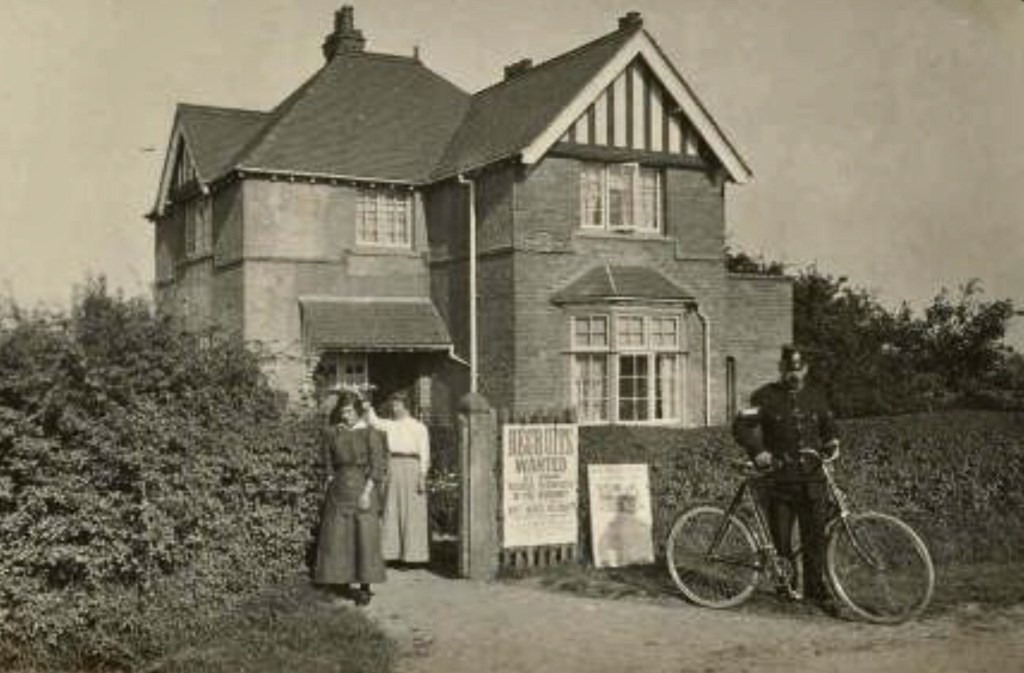
The Old Police House, Gloucester Road
The Davis family outside Welland Police House, Gloucester Road c.1914-1919
In 1905 a new police station was built on Gloucester Road (B4208) on land only enclosed from Welland Common in the 1850s (see map). This stretch of road had few houses along it at the time and the police station would have had fields either side at first. Perhaps the Drake Street police station was deemed to be no longer adequate or needed major repairs. Newspaper reports of the time indicate that Worcestershire County Council accepted the tender of Mr W James of Bromyard for the sum of £548 10s to build Welland police station.
By the time of the 1911 census Sgt George Cook was living there with his family.
Information from the General Valuation Survey visit of 1914 reveals that the house had a kitchen, parlour, back kitchen and one cell, with three bedrooms upstairs. Outside were a brick coalhouse, water closet, pigsty and water pump. Worcestershire County Council owned the house and the market valuation was £580. At this time Sgt Davis was the occupier. According to a villager in the 1940s, the cell had metal bars across the top rather than a roof.
Later police offers included Leonard Taplin Crawford (1921), Ernest Pratley, (1939 National Register), Jack Rogers, Gerry Day and Dave Henderson. The house was sold in 1983.
The full list of police officers known to have served in Welland can be found here.
Thanks to Bob Pooler of the Worcestershire Police History website and Stuart Hollandof facebook Malvern History Page.
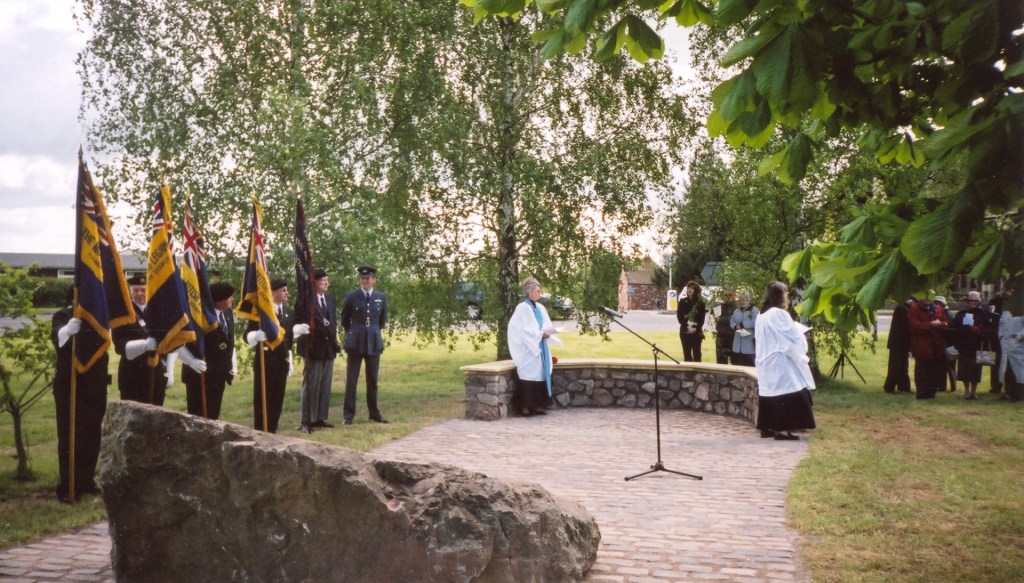
Welland’s war memorial is on the green near the village hall (see map). It was installed in 2005 and dedicated on Sunday 8th May that year, the 60th anniversary of VE Day. There were already plaques in St James’ Church listing the war dead of the parish but the memorial, set amongst grass and trees, is visible to anyone passing.
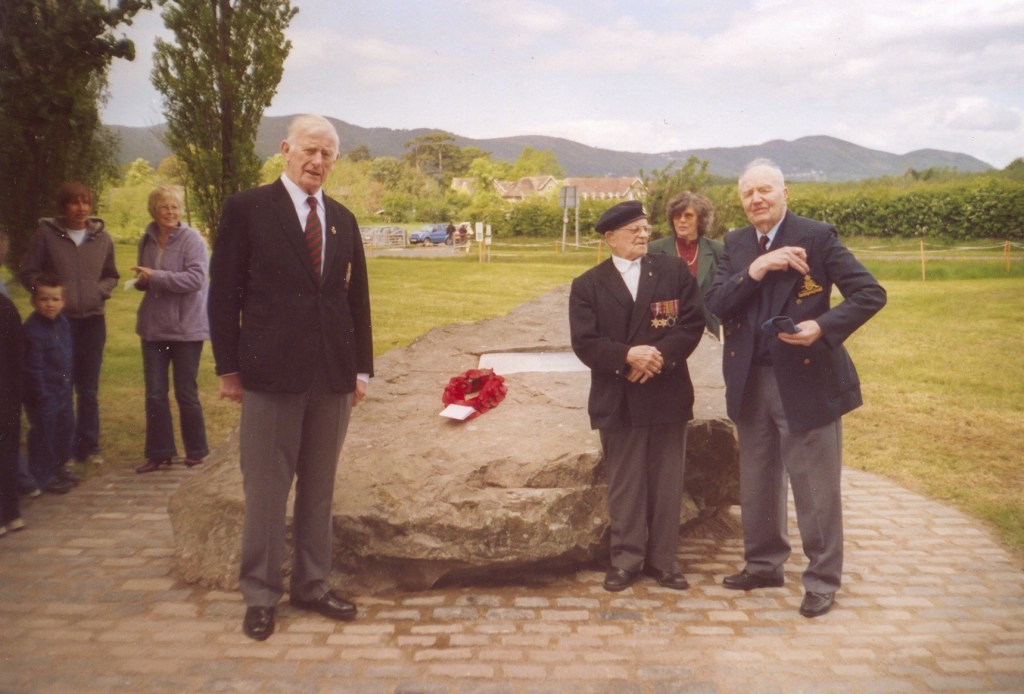
The memorial consists of a slab of granite donated by the Malvern Hills Conservators (now the Malvern Hills Trust). Inset is a stainless steel plaque bearing the names of the men who died in World War I and II and the inscriptions ‘In memory of the men of this parish and former pupils of Welland School’ and ‘For your tomorrow, we gave our today.’ This was provided by the Friends of Welland and Little Malvern.
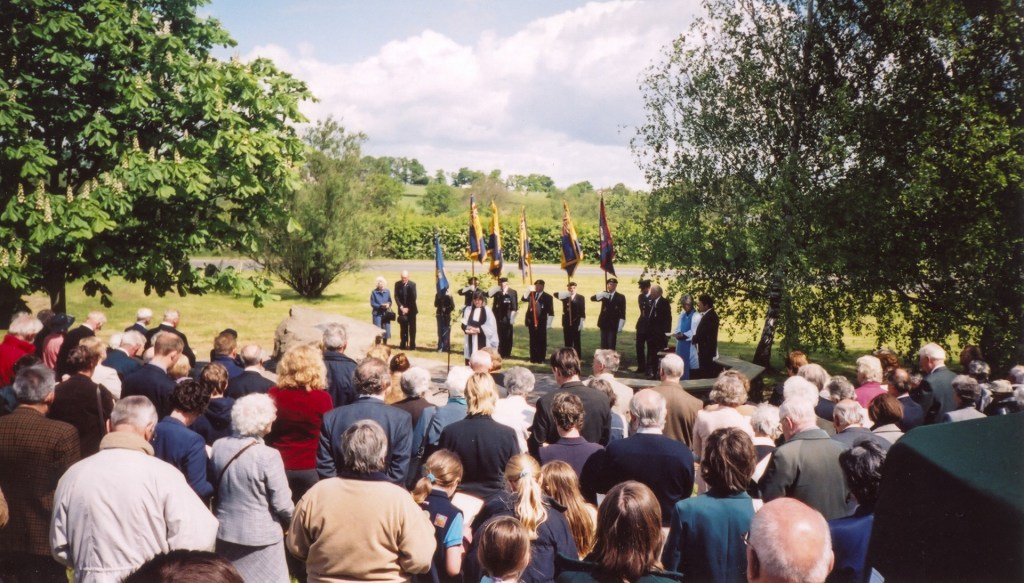
The dedication started with a church service led by the Revd Frances Wookey, vicar of Welland, at 11:00 am. Villagers and representatives from various regiments and the Royal British Legion then walked across to the green to complete the ceremony as shown on the photos. Refreshments at The Pheasant rounded off the event.
The Revd Frances Wookey, right, and Sue Richardson, lay reader for Welland and the Hanleys, left.
Many villagers attended the ceremony.
In the foreground: Gordon Bennett, Ray Ridley and Southwell Elms.
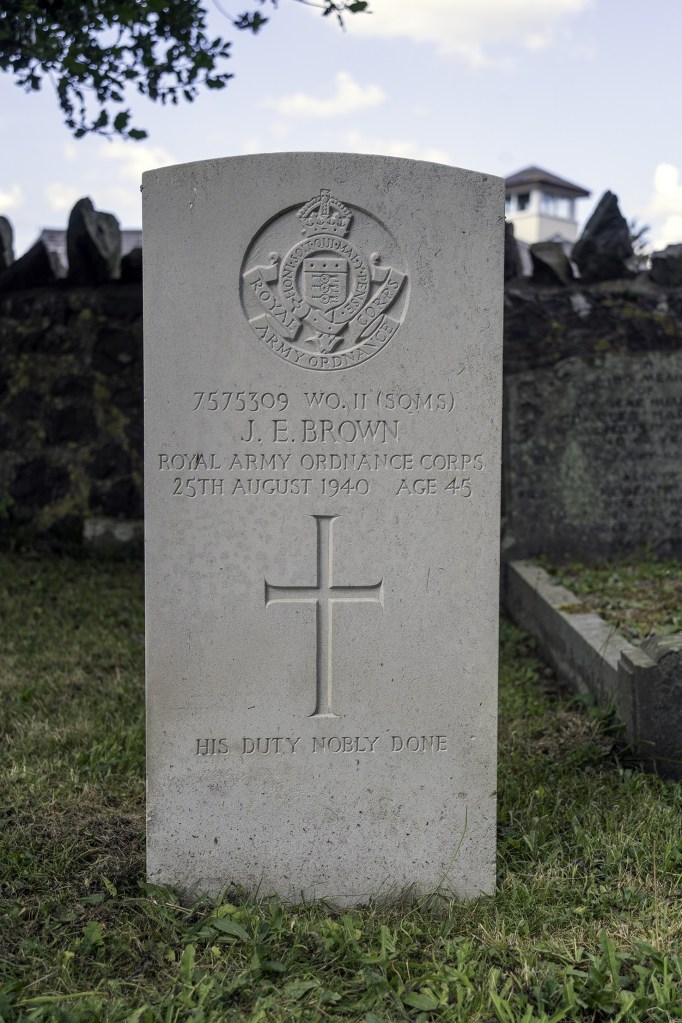
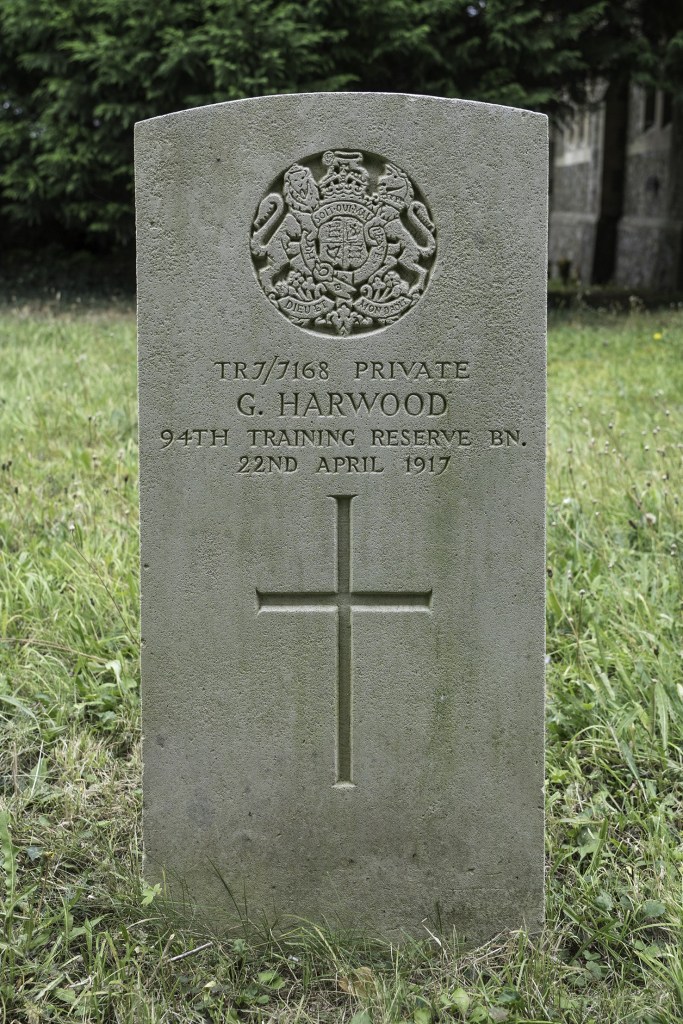
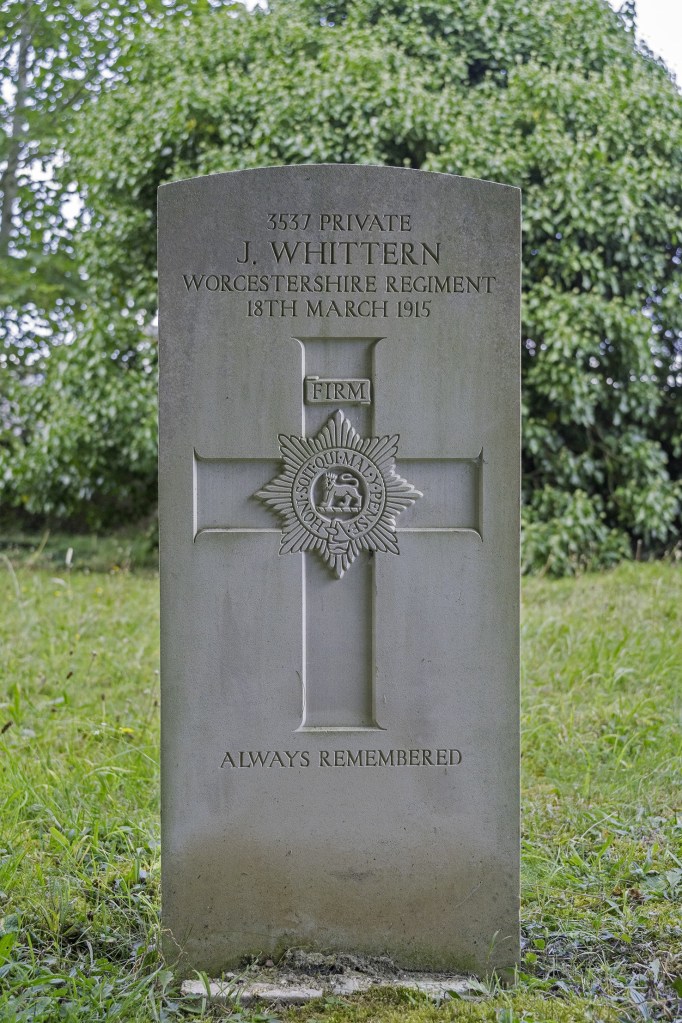
St James’ churchyard has three war graves, the headstones being provided by the Commonwealth War Graves Commission. These are the graves of: John Edgar Brown, d 1940, George Harwood, d 1917, and John Whittern, d 1915.
Photographs of the dedication ceremony courtesy of Bernette Arrowsmith, taken by the late Mary Purser. A folder kept on the Welland Library shelves in the village hall holds more photos of the installation of the memorial and the dedication ceremony, together with biographies of our war dead and their burial locations.
Hook Farm is some 400 years old, standing on land that once belonged to Little Malvern Priory (see map). Following the dissolution, all the priory’s lands in Welland were granted to William and Elizabeth Pinnock in 1545, William Pinnock being Lord of the manors of Hanley and Upton.
The farmhouse seems to have been built around 1600, as a deed of 1608 describes it as ‘newly built’. In that year Nicholas Cotterell, a tanner of Baughton, and his wife Alice, became the owners of the farm, then tenanted by Edward Doughty. The Cotterell family owned the farm until 1762, when the title was transferred to their tenant Joseph Curtis. It was inherited by his son, also Joseph, who died in 1828.
Charles Hastings (1794 – 1866) bought Hook Farm with 25 acres of land in 1833 for £1,550, following the death of Joseph Curtis’s wife. This was the famous Charles Hastings of Worcester Infirmary, surgeon, campaigner for improved housing and sanitation in Worcester, and one of the founders of the British Medical Association. His wife Hannah Woodyatt came from a Ledbury family, and Hastings spent the latter part of his life at Barnards Green.
During Hastings’ ownership the farm was rented by James Oliver. He appears with his family in the census returns for 1841 – 1871. The 1847 tithe map shows that common land still bordered Hook Farm to the west and south and the modern Hook Road did not yet exist. The farm at the time consisted of the house and farm buildings, a garden, and fields named Long Orchard, Broad Orchard Field, Lower field, The Two Acres, Bumpers Ground and Cow Pasture. The parish boundary between Welland and Upton ran along the eastern edge. A few years later, when Welland’s remaining common land was enclosed, Charles Hastings bought the land adjacent to the farm, adding about another 16 acres.
By 1881 James’ son George was in charge, working 40 acres and employing one man and one boy. George Oliver took over the lease in 1891 but also rented nearby Hill Court Farm, which is where he was living at the time of the 1891 census, Hook Farm being temporarily uninhabited.
After Charles Hastings’ death, his son George Woodyatt Hastings inherited a life interest in Hook Farm and Hill Court Farm. This was auctioned when he was declared bankrupt in 1896.
According to the census and other records, there were a number of occupants between 1901 and 1921. These included Thomas Clarke, a Mr Norrington, Walter Woodward and Oliver Ball. The farm was advertised for auction in 1918, following the death of George Woodyatt Hastings the previous year. It was then described as a dairy, stock raising and feeding farm with 51 acres of pasture, orchard and arable land.
John Henry Drinkwater was at Hook Farm with his wife and five sons by 1921 and is recorded on the electoral register at that address as late as 1949. After his death in 1950, the farm was bought by the Roberts family.
We are indebted to the late Mary Roberts, whose collection of deeds and other papers enabled us to establish the early owners and occupiers of Hook Farm.
The manor of Welland was owned by the Bishops of Worcester for most of its history. It was first a sub-manor of Bredon, itself a possession of Worcester, so Welland matters would have been included in the court records for Bredon. The earliest court that took place in Welland for which we have a record is 1546, suggesting independence by that date at the latest.
From Marlbank looking towards Bredon Hill
What were the court rolls for?
Once Welland became a manor in its own right courts were held there twice a year to deal with changes of tenancy, infractions of the manorial laws and appointment of local officials. Original Latin documents survive at The Hive in Worcester for 44 of the years between 1546 and 1661. They were stored originally as rolled-up documents, hence the name.
These courts were held usually in the spring and autumn. Each document starts with a standard preamble naming the current bishop of Worcester, the sub-steward who conducted the court, the day it took place and the year. This is followed by the names of those who should have attended but had submitted an excuse, and the list of men of Welland who made up the jury. The jury presented the cases to the sub-steward and the details of these and any fines imposed formed the substance of the record. What we don’t know is where in the village the courts were held, there being no resident lord of the manor. Nor do we know whether people always paid the fines imposed on them! All the monies collected at the courts went to the bishop of Worcester, referred to as ‘the lord’ in the rolls.
What value do these documents have for us now? We can use them to assemble a picture of some aspects of life in Welland during the 16th – 17th centuries. Many individuals are named, almost all men, and at least some of the properties mentioned can be identified. The three large common fields were in use: Westfield, Merefield and Tiltridge. Tenants were expected to keep their ditches clear, allow pasturing of animals on their strips of land at certain times of the year, put up fences where necessary and keep their animals from straying. Bakers and brewers had to adhere to the set standards for weight and quality. When tenants took on a property, they paid a fee (a heriot) to the bishop of Worcester and swore fealty. Sub-letting a property was generally forbidden and tenants could not take visitors into their homes overnight unless they had permission. On a few occasions the manor was fined collectively for the men failing to practise archery as required by law.
There would have been a few houses along Drake Street and we know from the map of the 1628 survey of Malvern Chase that houses extended along what is now Hanley Road and Woodside Lane by that date. The water mill along the Marlbank Brook was operational. The small village church and graveyard were next to what is now Welland Court. It is worth noting that the manor of Welland, owned by Worcester, did not cover the the whole parish of Welland as we know it today. Dauncies (called Welland Court from around the 1600s) and its estate, for example, were outside its jurisdiction, as was the land held by Little Malvern Priory. But the manor did include what is now Upper Welland.
Here are a few examples of typical entries.
Tenancies
John Badger, who held a messuage with appurtenances from the lord for 2s per year and owed suit of court, had died since the last court and 2s was due to the lord. An inquiry would be made as to who his heirs were. (October 1607)
A messuage was a plot of land with a dwelling house and outbuildings. Appurtenances were the rights attached to a piece of land. Tenants had to agree to attend the courts – this was called ‘owing suit of court’.
John Gwillam held a parcel of land called Hallhay and had died since the last court, whereupon a heriot fell due to the lord. His widow Elizabeth petitioned to be admitted as tenant herself according to the custom of the manor and made fealty to the lord. (April 1633)
Hallhay was probably near the junction of Woodside Lane with the Hanley Road. The tenant of Hallhay was also responsible for maintaining the pound and Brookend Bridgeon Drake Street.The brook is now culverted under the road.Tenants had to ‘make fealty’, ie swear loyalty to the lord.
Drake Street near Little Brookend where the brook crosses under the road
Elinora Careles held a cottage with curtilage called Streetend with two acres of land and had died since the last court whereupon a heriot of 3s 4d fell due to the lord. Thomas Smith petitioned for admission to have and to hold the tenancy. He made fealty to the lord. (April 1633)
Curtilage was the land immediately surrounding a house. Streetend was once the last property on Drake Street before the common. The plot is now occupied by Poplar Cottage.
William Turner acknowledged he held certain free land for an annual rent of 3s 4d and suit of court that he had bought from John Salter, whence fell due to the lord 3s 4d. William made fealty to the lord for the first time. (October 1640)
Waterways
John Brawlard was fined 20s because he had diverted the mill stream from its right course. (April 1578) A year later it was noted that he had not yet returned the stream to its normal course. (April 1579).
John Brawlard was the miller.
Fences, ditches and lanes
Christopher More was fined 6d for not making his fence at Tiltridge (October 1586).
It was ordered that whoever had land in Westfield and Tippers Croft was to repair the lane leading to Westfield before the Feast of St John the Baptist or pay a penalty of 2s 6d. (October 1601)
Tippers Croft was just west of Brookend.Byefield Lane leads to Westfield.
Byefield Lane with Westfield on the right
Clement Saunders and Edward Smith were ordered to scour their ditches before the Feast of St John the Baptist. (October 1607)
Richard Baylis was to repair the fence between his property and Richard Long’s before the Feast of All Saints under penalty of 10s. (October 1637)
Sub-tenants and visitors
William Green was fined 3s 4d for sub-letting his property. (October 1589)
It was ordered that no one was to receive into his house any strangers to live unless authorised by the parish under penalty of 40s. (October 1637)
Foodstuffs
Hugo Vicarage and Richard Hunt, aletasters, broke the assize of bread and were fined 4d. (October 1594)
Thomas Falkoner and Thomas Shaw, butchers, sold meat without a licence from the lord and each was fined 4d. (October 1601)
Assaults
John Robins assaulted and drew blood from William Morgan and was fined 3s 4d. (October 1600)
Officials
John Badger was elected constable and Roger Pitt and William Morgan were elected tithingmen. (October 1594)
The tithingmen were responsible for enforcing law and order in the manor and reporting incidents to the court.
Woollen caps and archery
The men of Welland were fined 10s because they did not wear woollen caps on Sundays and feast days. (April 1593)
An act of 1571 had imposed this requirement on boys and men (except for those of rank) to boost the wool trade.
The men of Welland were fined 10s for not undertaking archery practice. (April 1633)
A succession of laws made from 1252 to 1541 aimed to ensure that England could produce enough skilled archers when needed. By 1633 the longbow had largely given way to firearmsbut evidently the law was still being enforced.
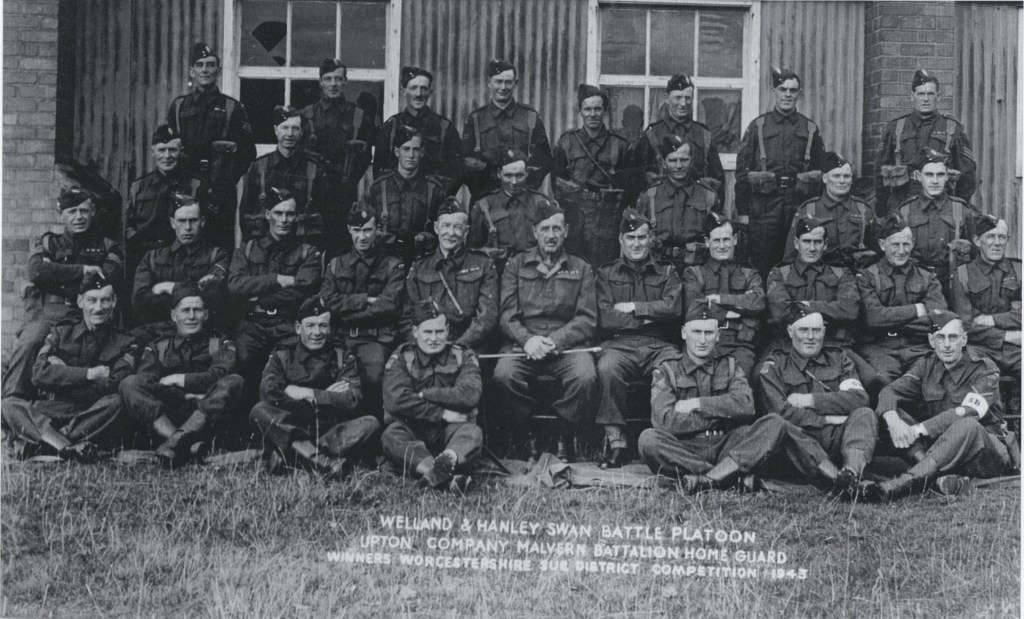
Welland and Hanley Swan Battle Platoon Home Guard, 1943
This photo and a list of names were supplied to us by Malvern Museum. The same photo, originally from the late Gordon Bennett of Welland, also appears in Mick Wilks’ Chronicles of the Worcestershire Home Guard (Logaston, 2014) with a slightly different list of names. The photo shows some of the men from Welland and Hanley Swan (HS) platoons, winners of the Worcestershire Sub District ‘Platoon in Attack’ competition in September 1943 (Wilks). We believe the building in the background may be Welland Village Hall.
From left to right:
Front row: Hubert Preston, Frank Hill, Ken Lawrence, Vernon Reece-Pinchin, Mike Hill, Harold Webb, Bill Shipman (HS).
Second row: Walter Reynolds (HS), George Pitman (HS), Owen Bayliss (HS), unknown, Lt (Col retired) C B Grice-Hutchinson, Major M F S Jewell, E C Watkinson (HS), Alec Dare, Ted Wheilden, G Dovey, Joe Dovey.
Third row: Harry Somers, Fred Carter, Raymond Hill, John Harbidge, Ernie Rouse, Charlie Wheeler, John Lewis.
Back row: John Allison, Don King, Bill Weaver, Joe Bullock, Dick Hart, Pat Oliver, Dennis Barnes, unknown.
Please get in touch if you can supply the missing names or think any of the identifications are wrong.
Situated on the curve of Drake Street near to where the Marlbank Brook passes under the road, Little Brookend is certainly an old farmstead but we do not know just how old it is at present.
The land tax records indicate that William and Mary Bullock owned Little Brookend towards the end of the 18th century and it may then have been called Bennets. Their son Richard Bullock succeeded them.
William Twinberrow bought the estate about 1830. It was tenanted briefly by William Harris but William Twinberrow then farmed it himself. After William Twinberrow’s death in 1841 his great-nephew Joseph Twinberrow took ownership of the property, with Richard Tyler as tenant, and this was still the case when the 1847 tithe map was drawn up. The tithe records show that Little Brookend’s land at the time included four allotments in Tiltridge (one of Welland’s three common fields), nearby on the other side of Drake Street. Another plot of land, Smithfield (now Bidders Croft), lay further east along Drake Street. The farmhouse had an adjoining garden and orchard and the brook formed the western boundary.
At the time of the 1871 census John Bridges was at Little Brookend, farming 20 acres, and by 1881 the tenant was widow Ann Watkins, who described herself as a ‘market woman’ in the census.
The Tombs family had taken over by 1891. Mark Tombs was a carpenter and wheelwright as well as a farmer. He died in 1904 and his wife Rose in 1906. An auction arranged for 28 September that year advertised livestock, crops and numerous agricultural instruments and equipment.
The farm was bought by L D Stowe in 1906 and Elijah Smith took over the tenancy the same year. (L D Stowe may be Louisa Dorothea Stowe, known to be resident in Castlemorton in 1911.) A few years later, in February 1914, the Valuation Office survey described the farmhouse as brick and half-timbered, with a tiled roof and ‘in fair repair’. It had a hall, sitting room, kitchen, back kitchen, dairy, four bedrooms and a box room. There were also a cellar, loft, mill house, coal house, two pig cots, meal house, stable, coal shed, two outhouses and three sheds. The adjoining orchard and a plot of land in Tiltridge were still part of the farm. The market value was assessed at £800.
Elijah Smith was a poultry and dairy farmer, originally from Lancashire. At the time of the 1911 census his household consisted of his wife Blanche, three young daughters, Margery, Elizabeth and Leanore, and a farm labourer, Lugard Douglas Boswell. Blanche Smith remained in occupation until the mid-1950s.
Several of the farm buildings on the site have been converted into separate dwellings over recent decades, forming Mill Cottage, The Old Cider Mill and The Pottynge Barn.
This tiny timber-framed cottage in a small plot of land once stood set back from the road, next to Holly Cottage on Drake Street (see map). This photo was taken in the late 1940s and the cottage was demolished in the late 1950s or early 1960s.
Photo: Mick Woodward – Honeysuckle Cottage
We do not have a record of when it was built but it resembles cottages elsewhere that date from the 17th century.
The ground floor had a living room and a scullery. Stairs led up to the sleeping area under the eaves. A pump supplied water from a well and there was an outdoor privy.
The tithe apportionment records indicate that Thomas Hawker, an agricultural labourer, lived there in 1847, when the house was owned by Sarah Homan of Lawn Farm.
The land tax records indicate that Lina Reynolds owned the cottage from at least 1893 to the mid-1920s. With a rent of £4 per year it was one of the cheapest houses in Welland. At the time of the 1891 census cordwainer William Lawley, his wife Mary, and their daughter were the occupants. From 1896 general labourer Joseph Jinnifer was the tenant, living there with his wife Clara and five children.
Records from the Valuation Office Survey show that the house was vacant when the surveyor visited in February 1914. The description reads ‘Cottage & Garden: brick, half timber & thatch in poor repair, with 1 Bedroom, Kitchen and Shed’.
At some point in the 19th century another house was built in front of Honeysuckle Cottage, hiding it from the road.
By the time of the 1939 National Register the house was occupied by William Hill, a coal haulier, and his wife, Rose, who lived their until their deaths in 1950.
Summerfield was built on Gloucester Road (B4208) in the early 1850s, after the land was enclosed from Welland Common and the plot sold to Sarah Bullock. It was a generous plot, 2.819 acres as shown on the 1886 ordnance survey map. It was only the second house to be built on that side of the road between the crossroads and the edge of the common.
The original one-up one-down house had a bread oven. There was a smaller single storey building against the boundary line, possibly another dwelling or a business. A well between the buildings still exists.
The Wagstaff family were occupants but not owners in the census returns of 1891 and 1901. When the house was auctioned in 1903 a Miss Wagstaff was tenant. The advertisement names the house as Summerfield, formerly Dutfields. (William Dutfield was one of the early owners.) It was described as a cottage with sitting room, three bedrooms, usual domestic offices and outhouses, etc. The rent was £26 per year.
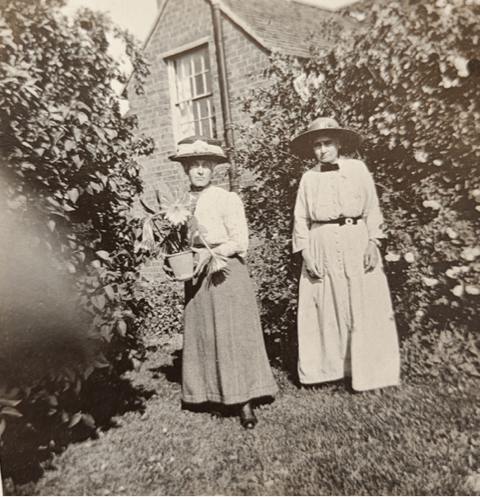
In 1908 the house and 0.75 acre of land were sold to Miss Harriett Thompson, who was already there as a tenant. Harriett described herself as lady gardener in the 1911 census. This photograph of two ladies in the 1900s is believed to show Harriett standing outside Summerfield but we do not know which of the two she is or the identity of the other lady.
By the 1921 census Harriett was recorded as a market gardener. This census also lists Clara Alcock as a boarder, and Robert and Margaret Carless as visitors.
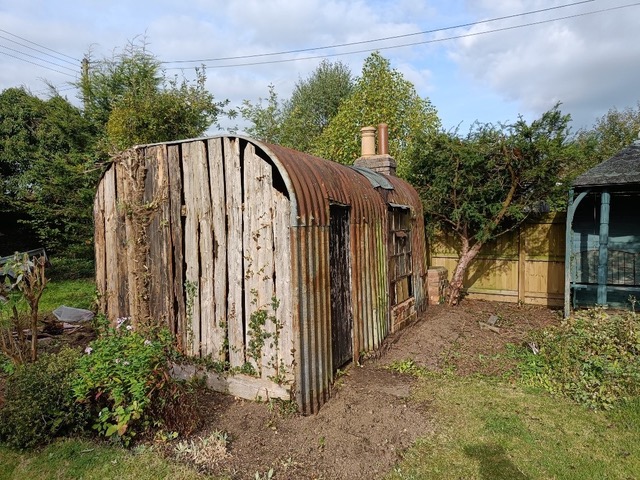
Winifred Postlethwaite was living there at the time of the 1939 National Register. The house was requisitioned by military personnel during the war, with Winifred being relegated to living in a purpose-built nissen-style hut in the garden. This was provided with essentials such as a chimney and cooking stove and an outside solid fuel heated laundry tub. The hut had survived in a dilapidated state, as shown in this photo, when the current occupants moved in a few years ago; it has since been restored, retaining all its original features, to make a pleasant garden-room.
The original plot was gradually sub-divided and is now occupied not only by Summerfield but also Orchard Close, Sunnymede, Red Gables and the village shop.
John Archer was a son of Humphrey Archer of Umberslade Hall near Tanworth in Warwickshire. His name appears in the court rolls for Welland from 1607 but he may have settled here earlier. He married Eleanor Frewen of Hanley Castle and they had at least seven sons. He was buried under the chancel of old St James Church, a privilege only granted to the most important people in the parish.
John appears to have lived at Hunts Farm (later known as Woodside) and in his will of 1640 he left this property and the water mill plus various pieces of land, to his wife. The extent of his landholdings is shown by the fact that in 1648 Eleanor was paying more than 25% of the total rent due for the manor of Welland.
Another three generations of John Archers followed in Welland. The hearth tax records of 1663 state that the house of John Archer, grandson of the above, had five hearths, second in number only to Welland Court, making it likely to have been Hunts Farm. In 1672 St James Church was re-built. An engraved stone was put up in the new church to commemorate this event, naming churchwardens John Archer and Ralph Taylor as well as the vicar Anselm Harford and architect John Avenant of Kings Norton. This John Archer died in 1713, pre-deceased by his son John in 1701.
The parish records for Welland are particularly sparse for the 17th century but there are few records under the name of Archer in Welland for any period. There are, however, many more in the surrounding parishes, who may or may not be related to the Welland Archers. A much later John Archer (1791-1877), who ran the Foley Arms Hotel in Malvern for many years, claimed descent from the Welland Archers, but we cannot substantiate this.
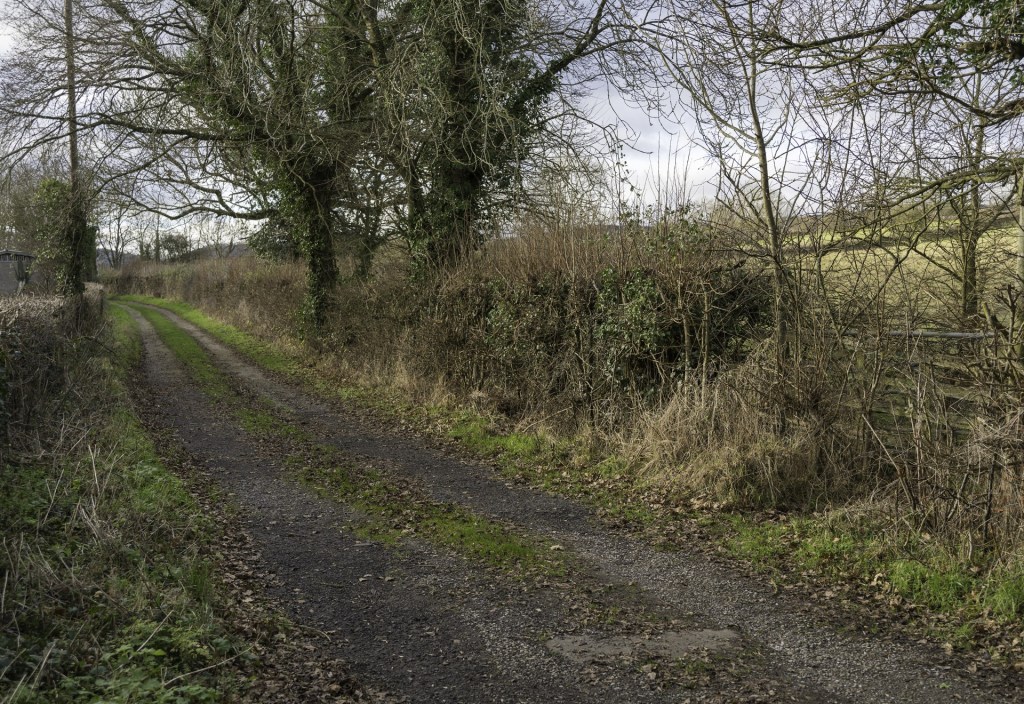
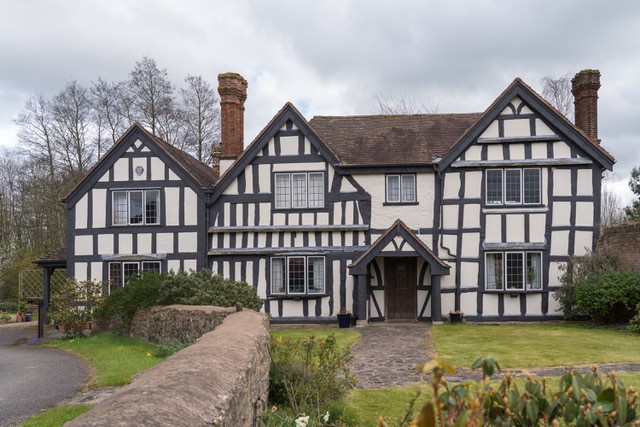
Woodside, now called Willow Grange, is a handsome timber-framed and brick house, one of the oldest in Welland. Its grade II listing describes it as probably 16th and early 17th century with 20th century additions. At the back of the house are the remains of a moat (see aerial image). The house lies off a track leading from the B4208 (see map).
The house is likely to be the one shown in approximately the correct position on the 1628 survey map of Malvern Chase and was probably called Hunts Farm before Woodside. John Archer is known to have owned Hunts Farm as it is mentioned in his will of 1640.
William Boulter owned Woodside from at least 1788 to his death in 1817. He was one of the Boulter family who provided three successive vicars to Welland between 1762 and 1828 but he was not a member of the clergy himself. His widow inherited it and then his son, also William.
Charles Mayfield Turner rented the estate in the 1840s from Thomas Hornyold. It was later farmed by Abraham Watkins, who was to donate the land for St James Church in the 1870s.
As the name suggests, the estate once adjoined and possibly included substantial woodland. A timber auction in 1829 advertised several lots of trees including 161 elms, 35 oak and 74 ash, all from Woodside. Welland Mill also seems to have been part of the estate until at least the mid-19th century.
In 1879 Woodside was bought by James Hartill Purser, whose father had owned coal and iron mines in Cradley Heath. The estate comprised 220 acres at the time. The family were there for about 20 years before moving to Church Villa. Woodside was then farmed by Frederick Hamilton and by 1939 stock farmer William Morris and his wife were living there.
The Birmingham Daily Post advertised Woodside for auction in July 1973, describing it as a ‘fine Elizabethan house’ with three cottages, farm buildings and 175 acres.
Most of the remaining land was later sold to the Ross-on-Wye Steam Engine Society to provide a permanent site for the Welland Steam & Country Rally, held in Welland since 1993.



 Exploring Welland