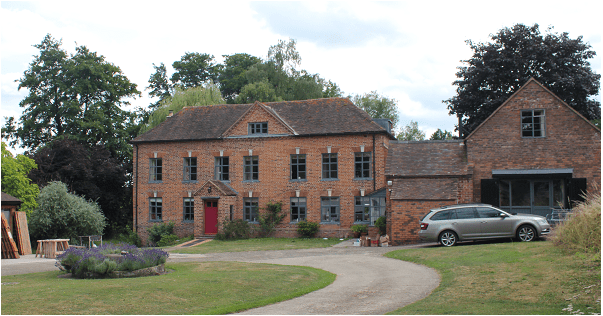
There is something a bit different about Marlbank Farm (see map). The main frontage looks much grander than you would expect from a typical local farm with two storeys and attics, but this grandeur belies the fact that most of the building is only one room deep.
Uncovering the history of the property has relied on a range of disciplines and contributions from local people.
The first description of the property comes from a series of deeds and mortgages commencing in 1778 and running through to the 1850s. The earliest refers to two properties: the homestead and a cottage called “Hills”, each with a small area of land (5 and 3 acres respectively). The deeds all relate to the Heming family, originally from Castlemorton, who owned the properties throughout most of this period and lived there from at least the end of the 18th century to the 1840s.
The 1828 tithe book refers to the whole property as “Lutwidges”, named after John Lutwich senior and his son, also named John, who owned and lived in the farmstead from before 1746. John Lutwich senior died in 1762 and his will refers to both properties: “Late Hills” being inherited from his father Richard Lutwich, and the farmstead from his mother Ann Lutwich nee James. Unfortunately at this point the documentary trail goes cold regarding the earlier history of the farmstead.
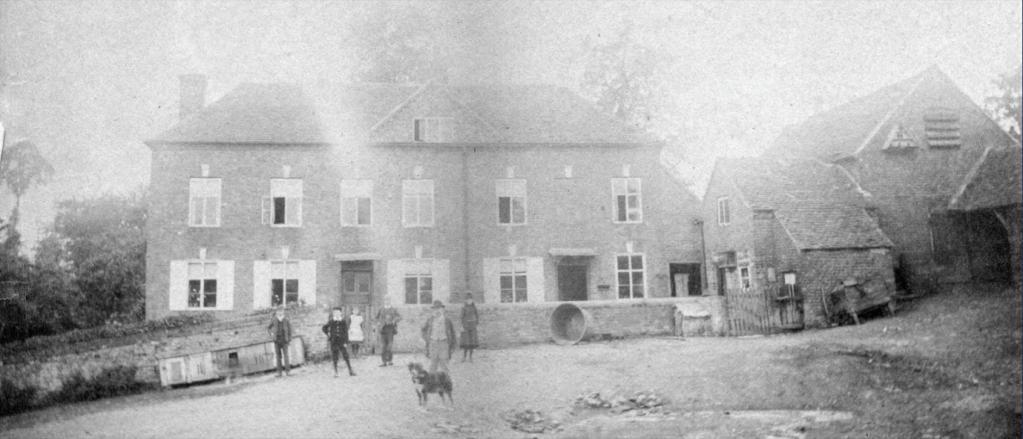
A specialist in historic farm buildings, Dr Edward Peters, visited the property in 1982 and his notes and observations provide an insight as to the age of the buildings. The keystone and window lintels provide key dating evidence for the construction of the building to about 1700. This ties in with the date mentioned in the Grade 2 listing for the house. He was also able to confirm that the house was all constructed at the same time, from bricks which were probably made on site (the current tenants have had some difficulty sourcing appropriate 2⅝ inch bricks for renovation work). He noted that one of the ground floor windows had originally been a doorway and this is confirmed by an old photograph of the Bridges family taken about 1890 (and is included here courtesy of Roger Wood).
Dr Peters made an enlightening suggestion that the property might have been built as a dower house. This does fit quite nicely with the fortunes of the Taylor family who lived at Welland Court. Edmund Taylor, the heir to Welland Court, was married in 1699 and his widowed mother Penelope lived until 1710. Welland Court itself was completely remodelled and encased in brick about 1700. Having somewhere for Penelope to live makes sense. Comparing the Constable’s rates of 1724 with the land tax of 1746 shows a reduction in the Taylor family holdings of a similar value to that for which John Lutwich was assessed in 1746. Although this is only speculation it could explain a lot about the construction of such a grand looking house.
When Thomas Hemming senior died in 1811 there was an auction held on the premises of his household goods and movable items associated with the farm. This paints a picture of a general farm with mixed livestock and arable, but with a preponderance of cider-related equipment. Newspaper adverts up until the 1870s extol the virtues of “Excellent Potting and Cider fruit growing in 7 Orchards” and in 1876 the sale of “4,000 gallons of very superior cider and perry, of excellent quality”.
The original 8 acres around the property grew to over 100 acres by the time of the Enclosure Award of 1852 and this remained fairly constant until 1975.
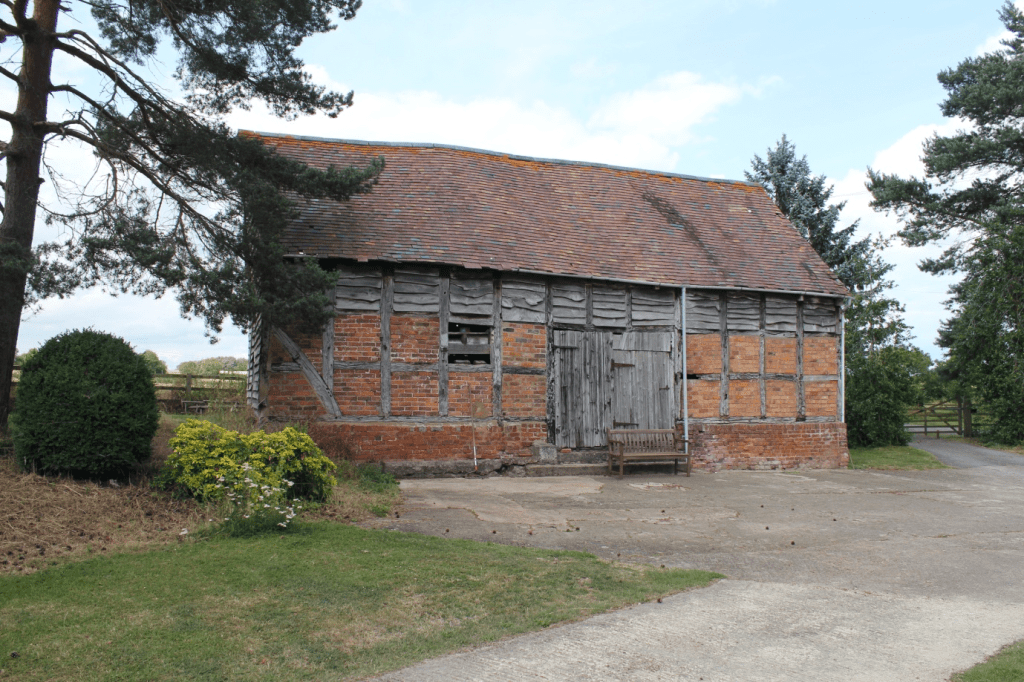
Some of the outbuildings still standing are quite early in date, particularly the Grade 2 listed threshing barn also built about 1700. From the 1880s onwards there was a greater focus on livestock – maps and aerial photographs from the late 19th and first half of the 20th century show how these barns and shelters grew in number and size to accommodate more animals.
The farm was owned by several absentee landlords during the second half of the 19th century, before being bought by the Beringtons of Little Malvern Court in about 1907. They owned it until 1947. The tenants during the Second World War do not appear to have been very effective at farming and the property fell behind. By 1947 Edgar Fellows was the tenant and he had introduced several improvements including a generator for electric light throughout the house and buildings.
Marlbank Farm continued to be a large and productive farm until 1975, with the Ratcliffe family being the last tenants. The Berington family then re-purchased the estate, stripping off most of the land and selling on the buildings as a family home with scope for a variety of business opportunities. This has been the situation ever since.
 Exploring Welland