The old church of St James and its churchyard occupied a site near Welland Court. As with several other parish churches in the area, the building did not fare well during the Civil War. Whether this was from neglect or deliberate act is not clear. A survey of vicarages taken in January 1650 notes that in Welland “… the Church is now downe and the minister doth officiate in the Churchhouse”.
The Church House was not the vicarage, as might be assumed, but a separate building near the church. Church Houses are an active subject of research nationally as many, like the one in Welland, are only referenced in passing. It seems that most parishes had one, with the majority constructed at the end of the 15th century or the beginning of the 16th (and none after the Reformation).
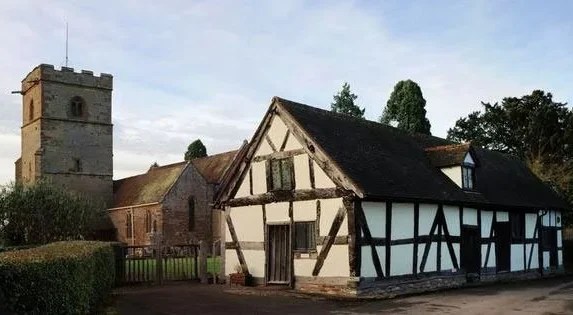
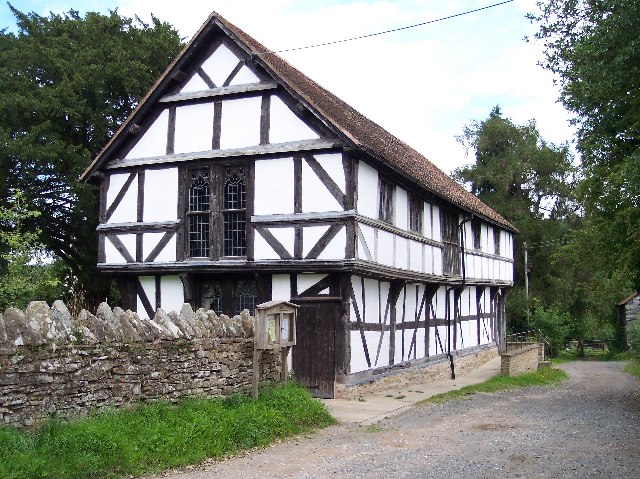
In previous centuries the naves of churches had been used for a variety of festivities. Beer was brewed there in preparation and events celebrated with music and dancing. Although the nave of the church was the responsibility of the parishioners, the Church authorities increasingly frowned upon its use for anything other than sacred purposes, hence the introduction of Church Houses for parochial entertainment. Typically Church Houses were built adjacent to the churchyard and were often quite substantial two-storey structures. In this part of the country they would have been timber-framed. They were maintained by the churchwardens on behalf of the parish.
In 1676 the Churchwardens noted that there were 72 adult males in Welland meaning there could have been as many as 200 people living in the parish at the time which would have necessitated a large meeting space.
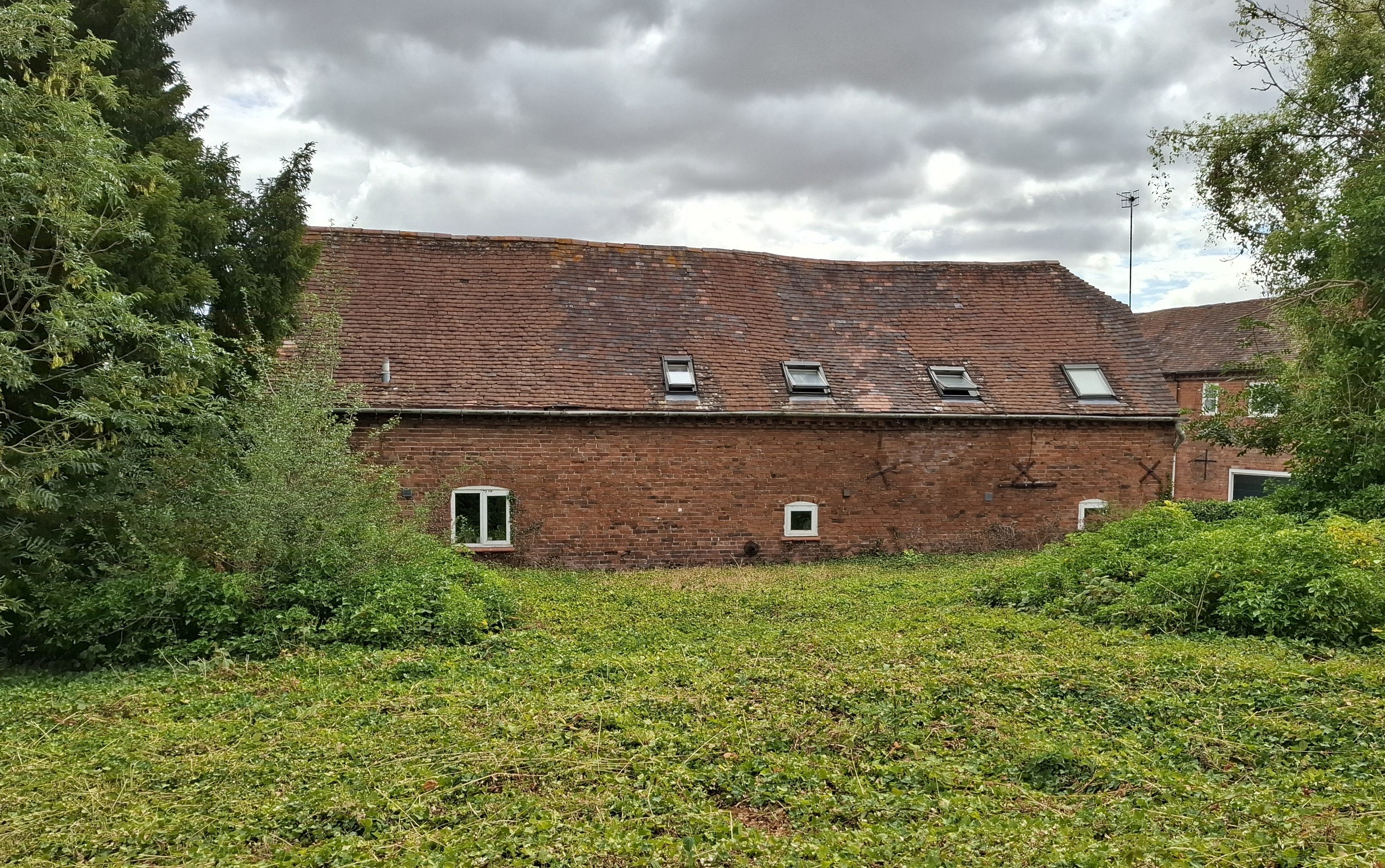
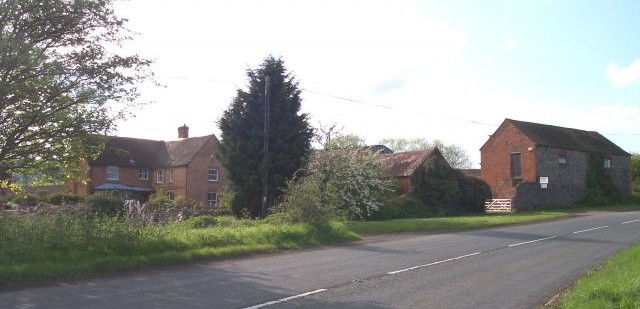
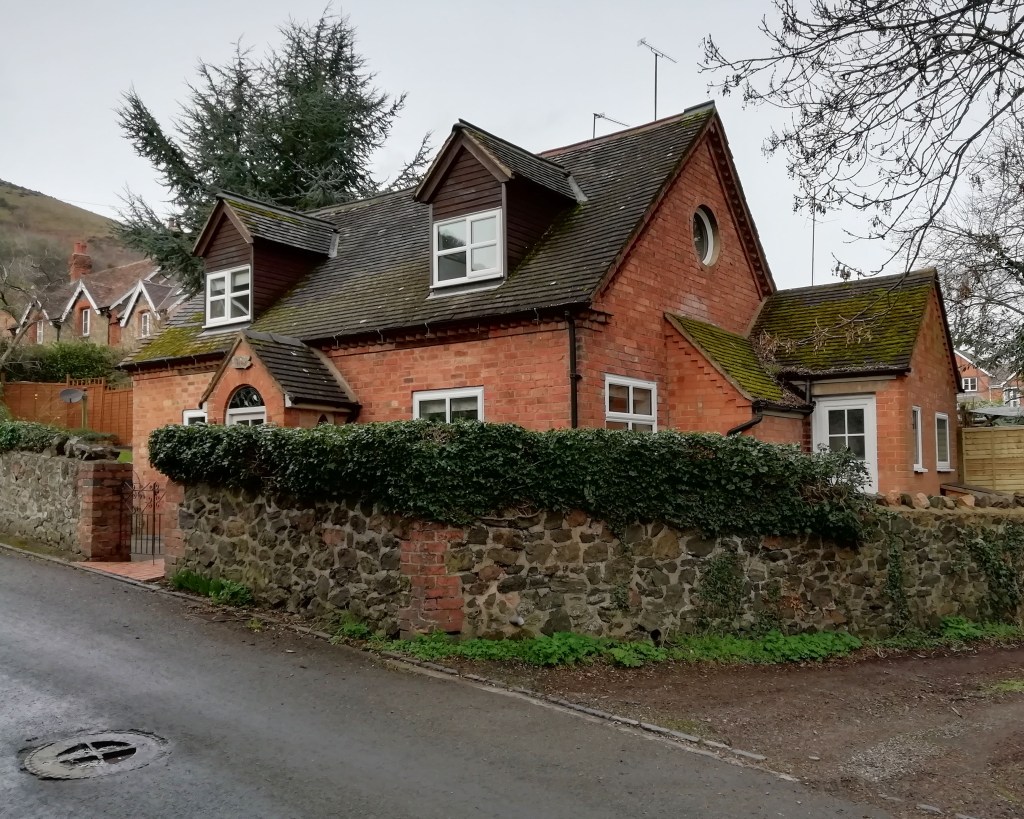
St. James’ was not rebuilt until 1674 meaning that the Church House was used as the primary place of worship for at least a quarter of a century. No other mentions of this building in Welland have been found and it is possible that it was decommissioned when the new church was built. The exact location of the Church House is open to speculation. The site may well have been at the eastern boundary of the churchyard and was later incorporated into the grounds of Welland Court where it was rebuilt in brick as a farm building (possibly the “Cider Cellar and Granary” mentioned in the 1910 National Valuation Survey).
Farm building at eastern boundary of old Welland Church
Two of the nearest surviving Church Houses are the Ale House in Colwall, and the Parish Hall in Cradley, both of which have survived because of their continued re-purposing as public buildings through the intervening years (see Transactions of the Woolhope Naturalists’ Field Club 2014 p169-171).
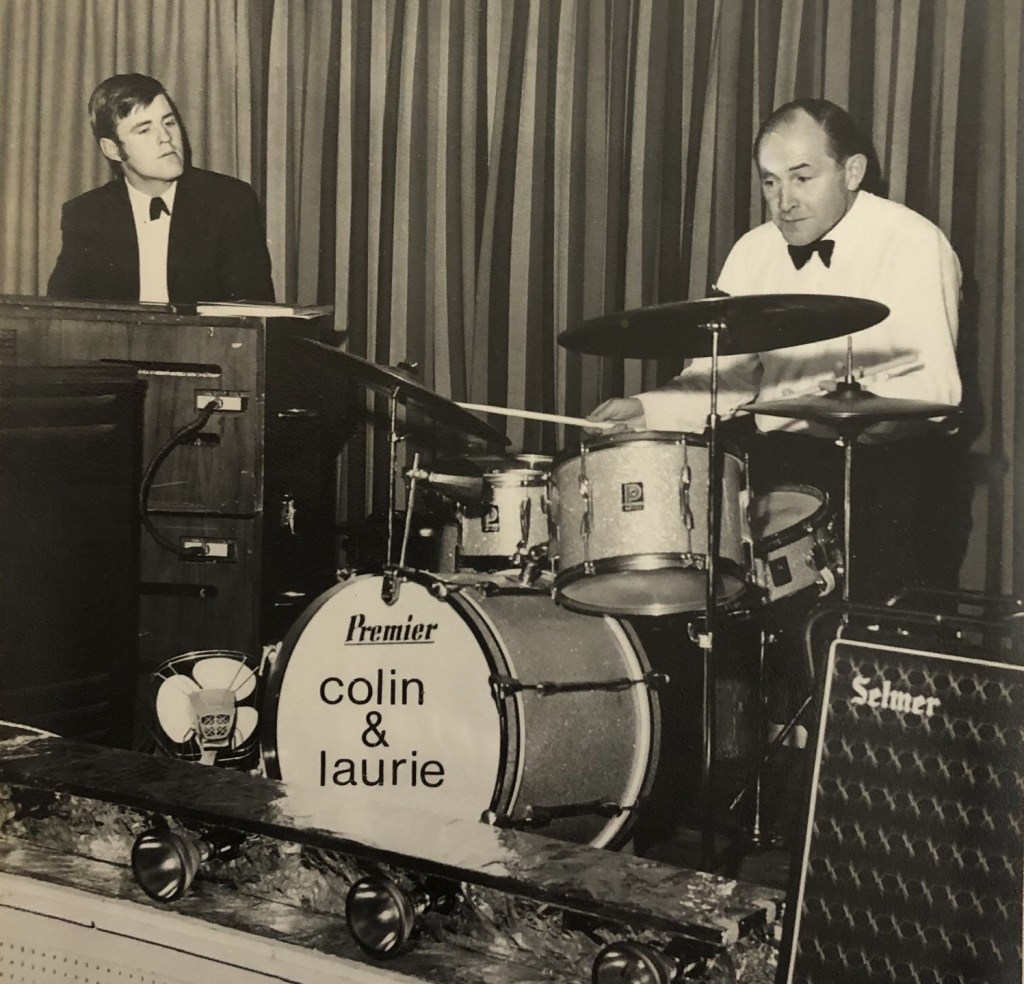
The Pheasant Duo played for the dances in the ballroom that landlord Southwell Elms had built at the back of the Pheasant. The photo is of Laurie Prior on his Hammond Organ and Colin on the drums.
The following text is an extract from an article written by Laurie Prior about his memories of working at the Pheasant (written June 2017 and posted in the public domain on a website called “The Lost Pubs Project”).
I worked at The Pheasant in 1972 and 1973 playing the Hammond Organ for dances in the annexe dance hall attached at the side and rear of the hotel. My sister worked behind the bar for a short time. I have some strange memories of the place, such as the chickens that were kept there and odd facts that never left me such as the telephone number – Hanley Swan 500.
The Landlord at the time was Southwell Elms, who seemed very comfortably off. He used to go gliding at Aston Down Airfield quite regularly. The dances were held every weekend for couples to come and do ballroom dancing and among them were a few championship medal winners who would come to rehearse their competition dance steps.
I played alongside Colin the drummer who was dreadfully loud and always did his best to upstage me and drown out my organ playing. I’m looking rather glum in the photo as the noise was starting to damage my hearing. Later on we added a pianist called John – I never knew their surnames. I was paid £20 per weekend for the two nights. Starting at 8.30pm, we played until midnight on Saturdays and 10 o’clock on Sundays.
I stuck it out for a while but, after I married, the hours working Saturday and Sunday nights every weekend were too anti-social and there was no way I could take a holiday unless I could find my own stand-in who could play the sort of music required, such as Foxtrots, Quicksteps, Sambas, Cha-chas and Waltzes – then for the old-time sessions, dances like the Valeta and Military Two Step. Rhoda Elms (Southwell’s wife) and her assistant did all the cooking to provide the dancers with meals at their tables in the interval, either chicken and chips or scampi and chips – served in a basket as this was the new style in that decade in so many pubs. The beer was good – and well kept at the bar, aided by a good cellar temperature.
I had more or less decided to leave because of the hours … when something happened one night that upset Southwell. It was over a request tune that one of his friends wanted playing for an anniversary. Colin said we would play it, if we had time at the end of the evening. Pressures from other requests ran us out of time and we forgot to play the tune. Apparently, Southwell’s friend was very annoyed, so Southwell called Colin and me aside to tell us off. He was rather rude, so I resigned on the spot and said, “I’ll be back next week to remove my Hammond organ and speaker cabinet.” I did exactly that – and I never went there again.
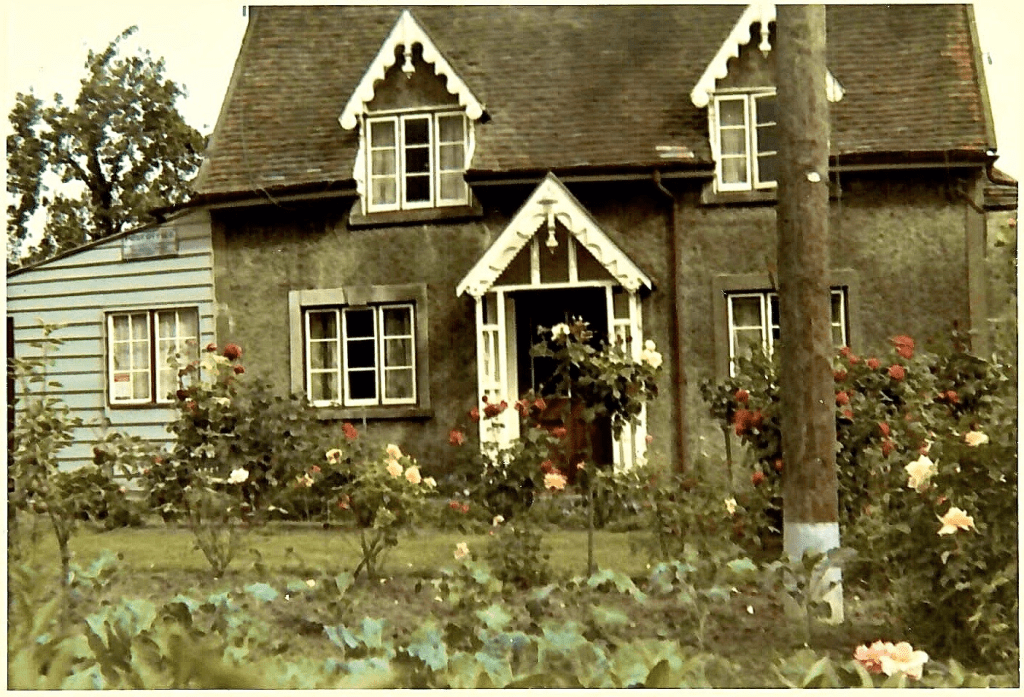
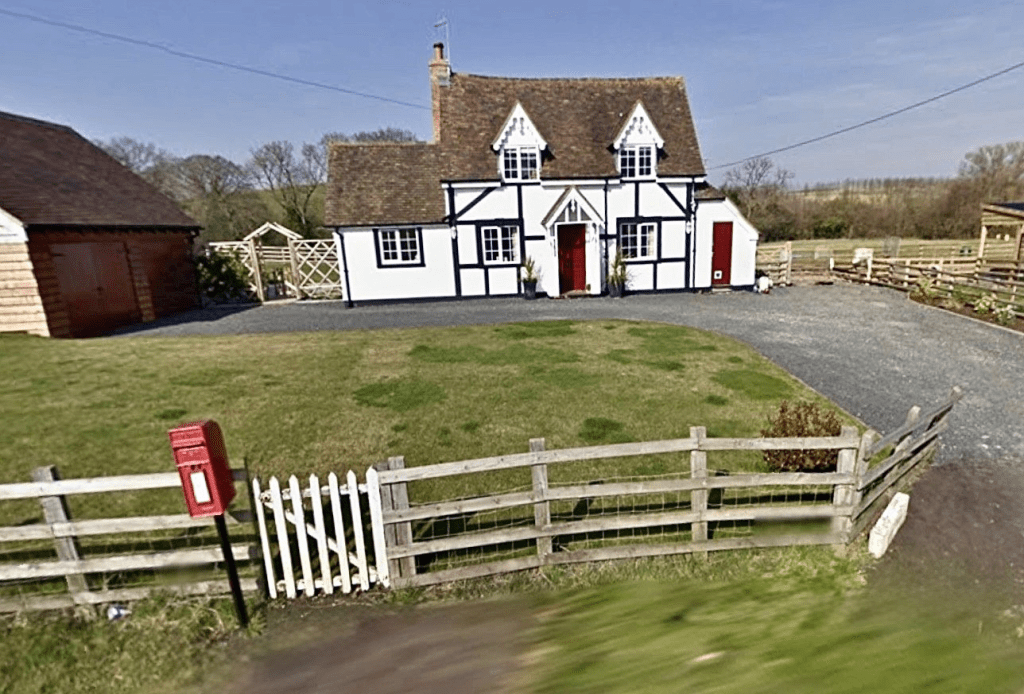
Today, Myrtle Cottage on Drake Street (see map) looks quite different from when it was the Post Office over fifty years ago. The change in appearance occurred at some point between 2007 and 2009. There are some old beams inside the cottage which are reputed to date back to an original dwelling, at which time it would probably have been built as a two roomed, single storey cottage open to the eaves, possibly in the early 18th century. The cottage is not a listed building but it has been classed as a ‘Non-Designated Heritage Asset’.
The Post Office and Telegraph Office operated from the small timber clad extension on the west side of the cottage, which was subsequently incorporated into the private dwelling.
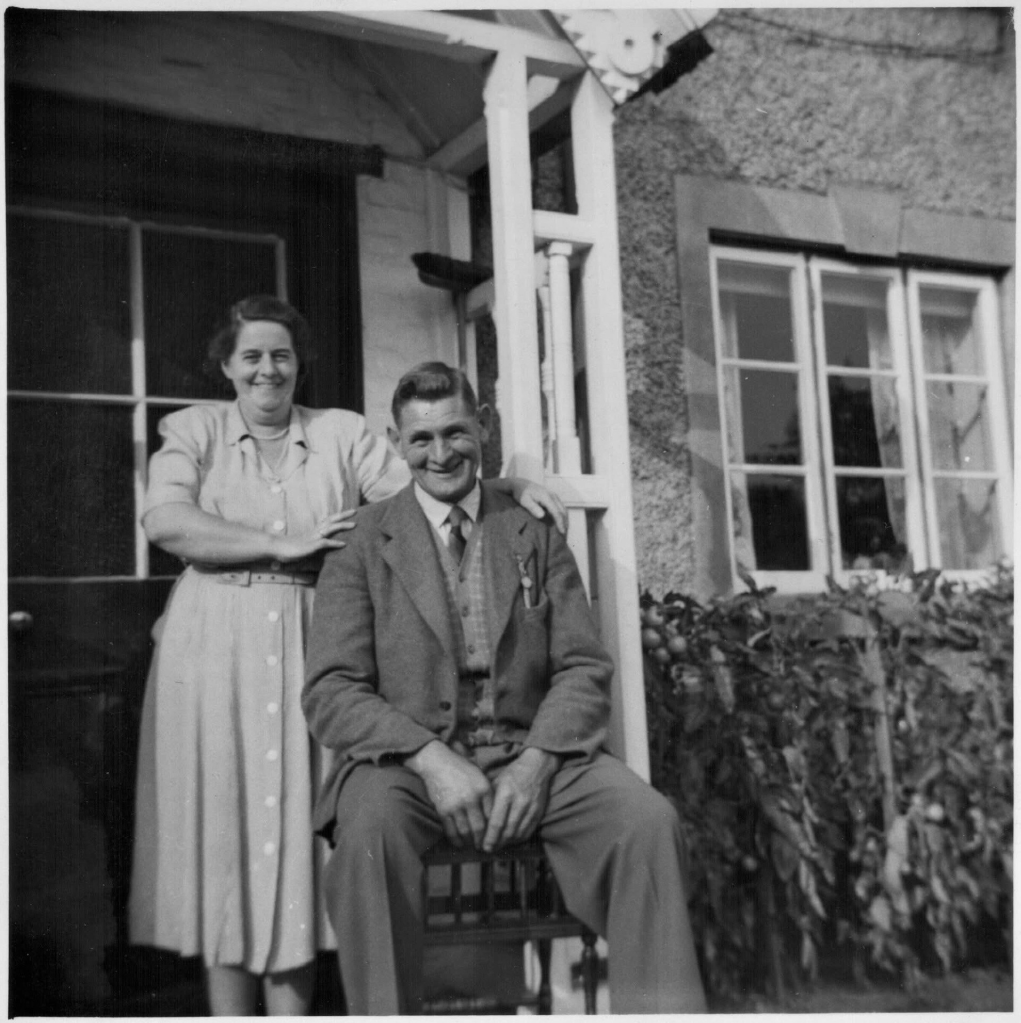
Mrs Price was the postmistress who lived at Myrtle Cottage with her husband Harry and their family. Mrs Price loved the post office and Mr Price loved his vegetable and flower garden, especially the roses. He was skilled in grafting his own roses and his campanula border was greatly admired.
When Myrtle Cottage was the Post Office it had a rose garden in front. The timber clad Post Office and Telegraph Office can be seen on the left.
The new look cottage (Google street view 2009).
Image 3
Myrtle and Harry Price outside their front door
Gwyneth Gill (née George) has a clear memory of Myrtle Cottage as the Post Office. She writes, “I have very happy memories of the place and I used to love walking in the garden and smelling the flowers, one rose in particular became my favourite – it was so lovely. Mr and Mrs Price were very kind, letting me look around and would often send me home with an apple or some other little treat. As a child, going there was like being taken on an outing to somewhere really nice”.
Many other people have equally fond memories, such as: The bell ringing as you opened the door, the wooden floors and counter kept spotlessly clean and always the lovely smell of polish.
Both Mr and Mrs Price were remembered as being a very jolly couple and making everyone welcome. Mrs Price was particularly fond of a lengthy chat with her customers when time allowed. One resident remembers her mother saying quite often “I have some Post Office business to attend to”, which actually meant she was just going to pop in for a chat with Mrs Price.
Several locals remember that as children they picked blackberries for extra pocket money. They took them to the Prices at the Post Office, for onward delivery by train to various markets. The children were paid for the blackberries according to how much their pickings weighed.
Others remembered that any children interested in stamp collecting were allowed to sift through Mrs Price’s vast collection of used UK stamps.
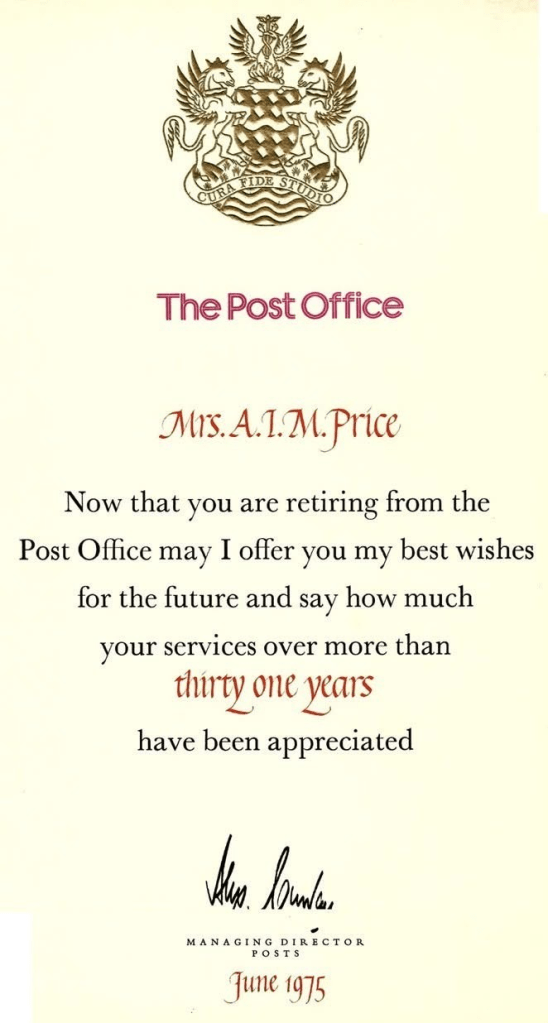
Mrs Price retired from the Post Office in June 1975 after 31 years service. She received a certificate of appreciation (image below) from the Post Office in commemoration of her long service:
With particular thanks to Dave Price for giving permission to use his photographs and to Gwyneth Gill for sharing her memories.
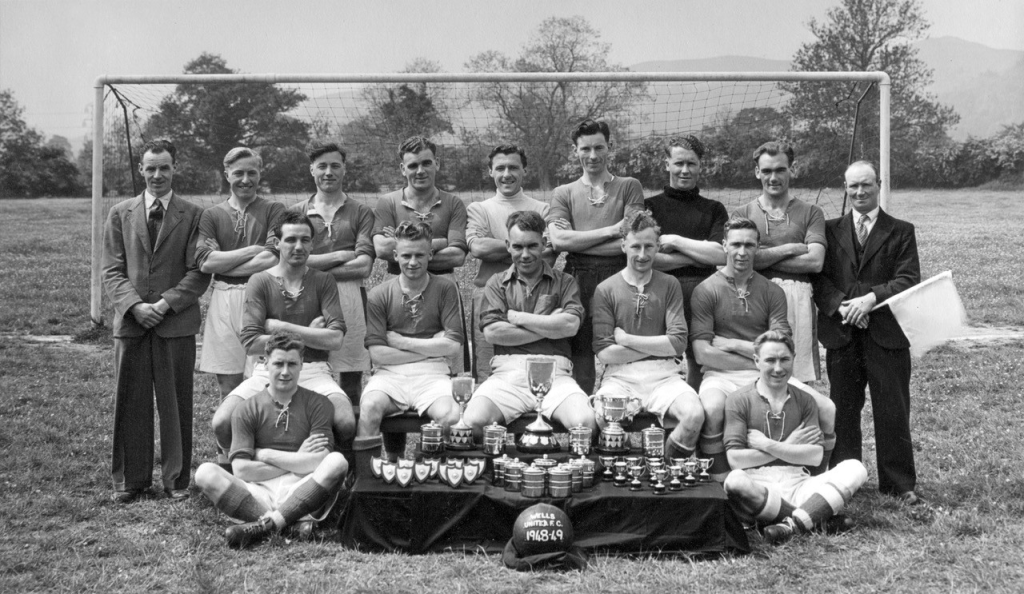
This photo, taken by the Norman May studio, shows the 1948-49 Wells United football team at a high point in their history, having won the Worcestershire Minor Cup, the Malvern Hospital Cup and the Malvern Senior League Championship that year.
Back row, l to r: G Tudge (trainer), Charlie Talbot, Southwell Elms, Ken Lewis (captain), Les Terry (goalkeeper & club secretary), Jack Morris, Jack Jones, Leslie Lewis, R Vincent.
Middle row: Ray Coates, Pete Barnard, Len Lewis, Ken Spencer, W Younge
Front row: Kenneth ‘Sammy’ George, Basil Vincent.
The team played on a field next to Woodend Farm in Upper Welland, nicknamed ‘The Dockey’ because of the number of dock plants that grew there. As many as 300 spectators would gather to watch the matches, paying an entry fee of 6d. The team had been revived by George Bullock in 1938 after a gap of some ten years. Ethel George, Sammy George’s mother, provided refreshments for the spectators at half time and oranges for the players.
Thanks to the following for the above information: Gwyneth Gill, Wendy Jones, Beryl Maile and Alan Vivian Smith.
Dank Moore and Daintmore are early spellings of the modern Danemoor.
The map of the 1628 survey of Malvern Chase shows an area called Dank Moore marked by two brooks. In the early 1630s a third of Malvern Chase was enclosed so that it could be leased or sold to raise money for Charles I. One of the enclosures in Welland was ‘St Giles Oake’ and this was where most of Danemoor farm’s land was located. Daintmore Farm certainly existed by 1724, when it is mentioned in the constable’s rate records, but it may possibly date back to the 1630s. Another of the enclosures, ‘Lumber tree playne’, was also part of the Danemoor landholdings but this was taken over by Charles Mayfield Turner in 1822, when James Price, the Bishop’s tenant of the Welland Thirds, went bankrupt.
The farm buildings are arranged round a yard next to the house. The age of the current farmhouse is unknown but it is probably not the original one.
It is believed that the house registered by William Purser and five others as a meeting place for dissenters in 1788 was Danemoor farmhouse (see article about nonconformity in Welland).
On the 1812 Ordnance Survey drawing of Malvern Chase, Danemoor Farm can be seen on the edge of the enclosed land, with fields behind it and an orchard on the north side of the farm buildings, but the land between Danemoor and Welland was still part of Welland Common. This was divided up into fields under the enclosure award of 1853 and as part of this award, a road was built to connect Danemoor Farm with Welland. Blackmore Park Road leads from the crossroads straight towards Danemoor Farm then turns right up the hill towards Malvern.
Amongst the tenants was William Green, who was there by 1817, when James Price was the proprietor, and still there in 1833, by which time Thomas Jenkins owned the farm. Richard Hill had become tenant by 1839 and was still there in 1851, describing himself as a farmer of 96 acres.
The 1881 census shows that Alexander Roxburgh was the farmer at Danemoor and managing 196 acres. Born in Scotland in 1829, the son of a farmer, by 1861 he was a travelling draper in Dudley with a wife and children. Ten years later he was farming at Hockhams in Martley and at some point during the next decade he became the tenant of Danemoor. Alexander’s son David took over the tenancy from his father. The 1910 land valuation lists Duke Gandolfi of Blackmore Park as the owner of the house, buildings and 111 acres of land, and David Roxburgh as the occupier. It was the fourth largest Welland farm by acreage at this date.
By the time of the 1939 National Register, David Roxburgh was retired and Thomas and Mary Lloyd and their family were in residence at Danemoor.
John Barley’s parents worked at the remand home from 1947-49 and 1956-61. This article is based on John’s memories of his time in Welland, supplemented by open source material.
The 19th century vicarage on Marlbank Road (see map) housed Welland Boys Remand Home from 1944 to 1982. Remand homes were set up in the 1930s to accommodate children who had committed crimes and were being held in custody before being tried or sent to a reformatory. Welland’s was under the control of Worcestershire County Council, being one of approximately 60 remand homes in England. At any one time it could accommodate up to 25 boys, 8 to 17 years of age. The age of criminal responsibility was then 8, rather than 10 as it is today. The boys were generally there only for a short period of time.
Amongst the early staff at Welland Remand Home were Ralph Barley and his wife. Formerly a naval gunnery officer on mine sweepers during the war, Ralph was appointed Deputy Superintendent in 1947. His wife, a nurse, became Assistant Matron. They arrived with their young son, John, and took up residence within the building.
John’s parents left Welland in 1949 to work in children’s homes elsewhere but they returned in October 1956, when John was 12, taking up the positions of Superintendent and Matron. Their letter of appointment survives, detailing their salaries and the board and lodging fees that were deducted, but no mention is made in the letter of the existence of John or his younger sister!
The Barleys did not live in an apartment as such. Their rooms, a sitting room, bathroom and three bedrooms, were scattered round the building. The fact that John and his sister were living amongst a transient population of boys with a range of problems does not seem to have been an issue at the time. John, in fact, does not recall feeling threatened or fearful at any time. He did not mix with the boys much, except for table tennis, but recalls that they generally behaved well. The boys worked in the gardens, the woodwork shed and played sports. They had supervised walks on Sundays on Castlemorton Common. For some, this was their first experience of the countryside and animals.
John was in Welland for about 7 years in total. He remembers the cleaner, Mrs Olga Docker, who lived in Vicarage Cottage next to the house. There was a visiting gardener who grew vegetables on the land now occupied by the houses of Lime Grove. John used to mow the extensive lawns at the back, using an Atco motor mower, and trying to get the stripes right. He had keys to the front and rear doors, which were always kept locked. Boys did try to abscond on occasion but didn’t get far. One made it to Upton before he was caught.
John used to catch the bus each day to attend Worcester Royal Grammar School, as did several other Welland children. The 363 bus left at 7.45am and he caught the 4.45pm to return. He later bought an Austin 7 from a member of the remand home staff and taught himself to drive in the grounds. He re-built the engine in the workshop behind the house.
On Sundays he went off on his bike to attend Mass at St Wulstan’s at Little Malvern. He did gardening and farm work at Woodside Farm for Mr Broatch. His parents trusted him to go off on a cycling holiday to Essex with a schoolfriend and generally he was free to come and go as he pleased. John lived in several places as his parents moved jobs around the country but Welland is the one that stands out for him.
Reports in the Worcester Journal suggest that there were problems in later years at the remand home, with an increasing number of boys absconding. Minutes of parish council meetings of the time also highlight the issue. One example is from the early 1960s, when a supervisor, who was following a fleeing boy by car, called at a local’s home, Windyridge on Garrett’s Bank, to ask for help because he had run out of petrol. The owner provided a gallon for which he was paid four shillings and tenpence.
In 1970 it was decided to employ more supervisory, teaching and domestic staff to increase the ratio of staff to children, and to provide full-time education. Plans were made in 1972 to extend the building and build a staff house and garages. But the following year saw the end of the remand home system and a move towards more rehabilitative care. Welland House was later referred to as an ‘observation and assessment centre for 24 boys’ and a ‘special school’ taking boys that were deemed too disruptive to be in mainstream schools. It was recommended for closure in 1982 following a poor report. The property went up for sale in 1983 and became a care home, now Welland House Care Centre.
With thanks to John Barley, still a regular visitor to Welland, and also Neil Hancox, who supplied the anecdote about Windyridge.
Not all settlements survive the test of time – they wax and wane over the centuries according to factors such as economics, climate and health. Welland is as susceptible to these factors as any other parish.
The 1628 survey map of Malvern Chase, made on behalf of Charles I in readiness for the sale of parts of his land, provides us with a snapshot of the area of the time. Most of Welland village is not shown as it lies outside the area of interest (the focus is very much on the Chase and its boundaries) but certain parts of the wider parish are indicated. On the eastern boundary of the Chase (marked in yellow on the map) an intriguing reference is made to a building and area marked Quab (its location on a modern Ordnance Survey map can be seen here).
Malvern Chase 1628 Survey Map (west is at the top of the map, see full map at Europeana)
The word “quabb” may derive from the Old English cwabba meaning marsh.
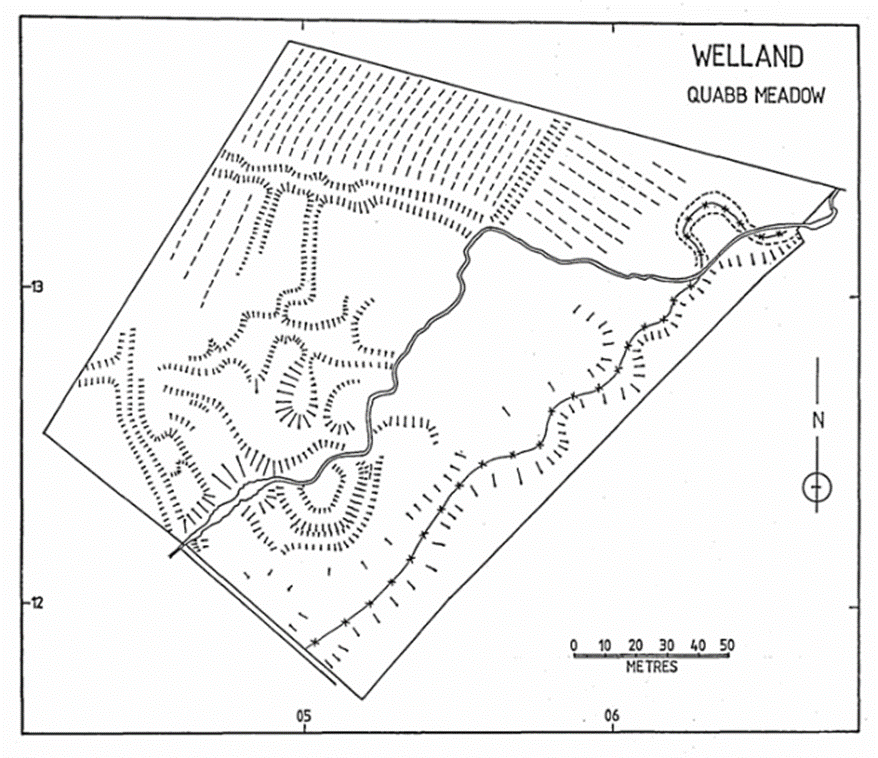
The South Worcestershire Archaeology Group (SWAG) undertook a survey in 1985 and were particularly interested by what they found in a field referred to as Quabb Meadow. Being left as a meadow (not built on or ploughed over in recent centuries) it had retained many historical physical features. The survey discovered evidence of a change in the course of the stream running through the area, several holloways, ridge and furrow plough marks, garden enclosures and hut platforms suggestive of a small deserted settlement, together with a larger platform surrounded by a ditch, perhaps indicating a small moated site. A curving holloway on the western edge aligns with the old boundary of Welland Common (though no evidence of the building marked on the boundary on the 1628 map was noted).
Mapping of landscape features found by SWAG 1985 (used with permission)
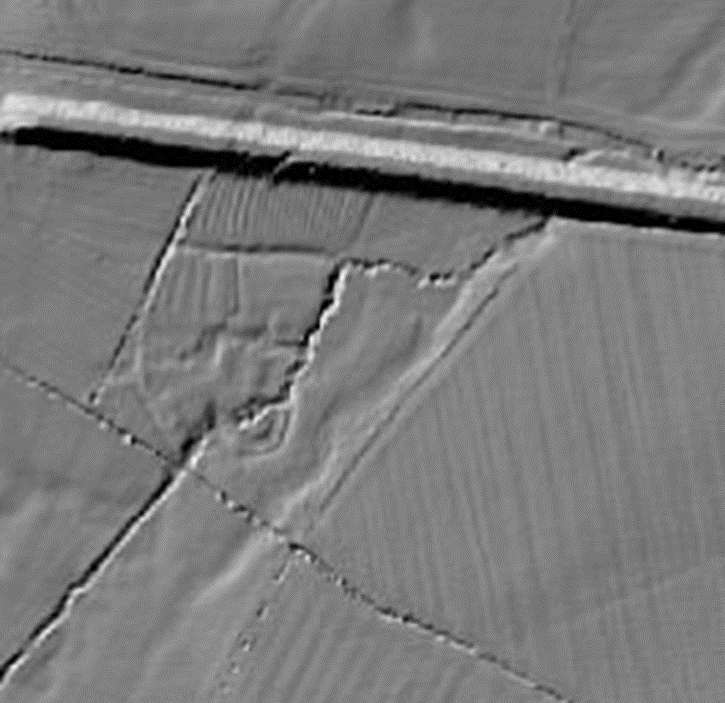
Modern LiDAR mapping (not available at the time of the 1985 survey) shows the landscape features discovered and documented by SWAG.
LiDAR showing location of survey. The heavy line to the north of the meadow is the embankment of a disused railway (cutting through the area of interest) and north of that is Gilvers Lane.
Thus, archaeological techniques back up the suggestion from the 1628 survey map that there was a small settlement at Quabb Meadow (perhaps served by Gilver’s Lane). But is there any historical evidence other than the survey map to back this up?
A perambulation of Malvern Chase boundaries in 1584 includes a reference to passing Hanley hall and Tyre Hill, continuing towards Welland by Gilvers Lane End and the Quabbs. As perambulations require fixed points of reference, this is likely to be referring to a specific settlement or building rather than an area of land.
A conveyance of 1658 concerning land belonging to the Earl of Dorset includes a reference to “the Quabbs, now divided into several closes” and a document dated 1667 relating to the Earl of Dorset’s lands refers to “…all that one close of pasture and meadow ground with the appurtenances called or known by the name of the Quabs containing in the whole by estimation 60 acres or thereabouts…”
Other documents of the 17th and 18th century reference land at the Quabbs, occasionally alongside references to buildings, but these are not clearly stated as being on the Quabbs. No buildings are marked on the 1816 Ordnance Survey map nor the 1847 Tithe Map of the area. We have not been able to find a reference to the demolishing of the property.
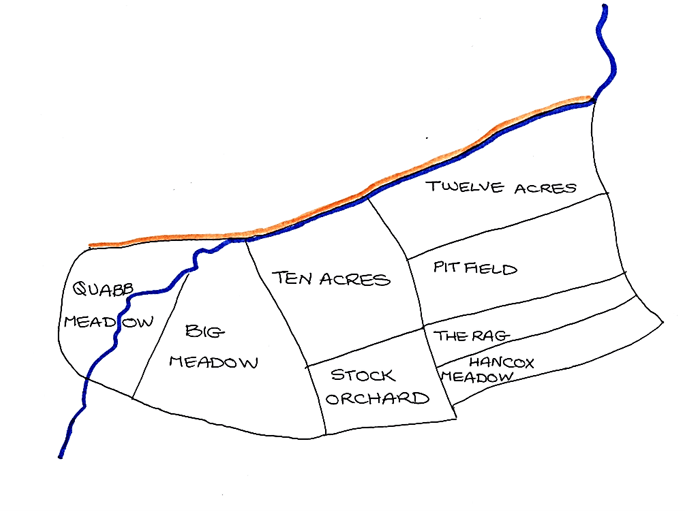
The historical documents indicate that The Quabbs (settlement and land) was about 60 acres and is likely to be the area shown here with field names (from the 1847 tithe map):
1847 tithe map fields. Also showing Gilver’s Lane and stream course
The shape, position and features of the land indicate that it was an assart (created at the behest of the landowner, the Bishop of Worcester) managed independently of the medieval village’s three common field crop rotation system. The shape of the eastern-most fields (long narrow inverted S shape) suggests that these were once ploughed ridge and furrow arable. The fields to the west, being wetter (proximity to the stream) were more likely to be pasture, a suggestion affirmed by the tithe map field names. However, SWAG did offer some evidence of ridge and furrow on Quabb Meadow itself (backed up by the LiDAR mapping), suggesting it was put to the plough at some stage in its history (medieval land pressure peaked in the early 14th century due to strain on agricultural resources as a result of population growth.)
The Quabbs holds a position of some importance in the history of the parish as it is the only area of medieval settlement we are aware of that does not have buildings still in place, thus leaving landscape evidence accessible to archaeological investigation.
For virtually a millennium leading up to the beginning of the 16th century, the church in Britain was part of the see of Rome, recognising the Pope as its primary authority. There were, however, an increasing number of those who protested that the official church, in accepting certain theology and practices, had lost the true essence of the Christian faith. The complex story of the Reformation in England resulted in the breaking away from Rome by the church in England and the formal acceptance of these Protestant ideals. This new church inherited all of the existing parish structure and buildings, becoming known as the Anglican or Established Church, the Church of England.
Despite persecution, some continued to practise their Catholic faith in secret or under great duress. The significant role of Catholics in the history of Little Malvern and Welland is not covered here and requires a separate research article.
Since the Reformation, there have been many Protestant groups who have found themselves at odds with the Established Church and have developed their own practices and forms of worship. Whilst mentioning a range of nonconformist denominations this article does not attempt to describe them in any detail.
Rod Ellis’ book “Dissenters All!” demonstrates the variety and prevalence of nonconformist chapels across the Malvern area. The only surviving religious building still used for nonconformist worship in Welland is the Methodist Chapel in Upper Welland. The story of the chapel also covers the history of Methodism in Welland.
This article explores other strands of nonconformist faith and worship in Welland. The evidence for these individuals and their meeting places is often fragmentary, but taken together shows that dissenters were a significant presence in the parish.
Early Dissenters
A series of Churchwarden presentments from the 17th century provide the first glimpse of individuals who refused to worship in the Anglican Church of St James. In 1663 James Surman and his wife, widow Fellis and Ann Pratt did not “com to the publike”. This might have meant absence rather than dissent. The only person formally identified as a dissenter among the papers is Thomas Luddington who appears in the presentment of 1676. It is not clear why he was not named in other years. All of these individuals were of independent means and could weather any strictures that might have been applied to them. Thomas Luddington was not a Catholic, but the form of his dissent is not known.
Early Meeting House Registrations
Following the Toleration Act of 1689 it became legally permissible for dissenters to meet in public, provided that their meeting houses were officially registered. The first such that has been found for Welland was in 1788 when six men registered the “…dwelling House now in the occupation of William Purser”. This was probably Danemoor Farm. In 1818 Thomas Williams, who lived in the house called Brookend, registered a “…building part of his dwelling house… intended forthwith to be used as a place of religious worship by an assembly or congregation of Protestants…”. The nature of these assemblies is not made explicit and it is not known how long these properties were used as places of worship.
From the late 1820s things become somewhat clearer. The growing tensions between the various churches and denominations are revealed by the 1851 Ecclesiastical Census. The Curate of St James, Rev. Other Philpott, noted only 70 adults and 38 children (less than a quarter of the population) attended service on the day of the census and complained, “It may be observed that the Church, standing at the extreme boundary of the Parish, a large proportion of the Welland parishioners attend other churches”. There does not seem to have been much love lost with Benjamin Onions, who submitted a return for the Independent chapel in the parish, complaining that in 1835 the numbers of children attending the Sunday School had dropped significantly “… by the influence of the Established Church”.
The Independent Chapel and the Countess of Huntingdon’s Connexion
In 1830, the house of Boaz Wadley was registered by Protestant dissenters Boaz Wadley, Benjamin Onions and Richard George. This is now known as Day’s Farm. There is a link between this meeting place and the Countess of Huntingdon’s Connexion. The Wadleys and the Georges had their children baptised in their chapel in Great Malvern. The Education Return of 1833 noted that the Huntingdonians provided for the Sunday School and Bentley’s Directory of 1840 advertised “…a chapel in Malvern Wood occupied by the Lady Huntingdon’s Society, which will seat 120 persons”.
In the Ecclesiastical Return of 1851 Benjamin Onions untangles some of the history, but raises more questions in the process. He notes that “…before 1834 two rooms were rented for Sunday School and Service”. This was probably at Day’s Farm. The Independent meeting place that he described in 1851 was built in 1834 and, although known as the ‘School Room’, was used exclusively for worship and could hold 50 (although the general attendance was 40). Although it had been supported by the Huntingdonians in the past he noted “Services conducted by various village preachers of different denominations”.
Identifying the location of the chapel/meeting house and school room has generated considerable research. Boaz Wadley moved from the farm in 1835 which presumably prompted the construction of a new meeting place. Benjamin Onions was a shoemaker and lived at Midsummer Cottage prior to his father’s death in 1838 and the 1847 Tithe Map shows a cluster of buildings owned by him. One is a building where Chapel Cottage now stands and was described (misleadingly) as “House and Wesleyan Chapel”. Chapel Cottage was originally a pair of cottages which had very small rooms. It is more likely that Vero Cottage (now demolished) was the purpose-built chapel. Former local residents remember that it had a very large room at the front with open stairs and a big double-door on the side closest to Chapel Cottage. The residents in the 20th century did not use this room as it was too big to heat. The School Room may have been where the garage of Chapel Cottage now stands as it is shown as a larger structure on late 19th century maps.
The 1861 census for Welland notes a “Small Independent Chapel” next to a shoemaker’s shop in this vicinity. Noake’s Guide to Worcestershire published in 1868 states in the section on Welland that ” …the Dissenters have a small chapel in the parish.” This is the last mention of the chapel in Welland. Benjamin Onions had died in 1863 and the meeting place faded soon after.
Chapel Cottage
The United Brethren and the Influence of the Latter Day Saints
It is possible that some of the village preachers invited by Benjamin Onions to lead services at the Independent chapel were from the United Brethren. The key mover and shaker of the United Brethren was Thomas Kington. He appears to have been expelled from the Primitive Methodists in about 1833 and soon after began preaching all around the Malvern Hills. He registered dozens of cottages as meeting houses including in Malvern, Upton and on Castlemorton Common. Although a very local denomination they attracted a lot of followers in the rural parishes immediately around the hills.
In 1840 a mission from the Latter Day Saints in the US arrived in Herefordshire led by Wilford Woodruff and, according to their records, the leaders of the United Brethren and most of their congregations converted to Mormonism. Many of these folk then emigrated to Utah during the 1840s.
Woodruff’s journal entry for 22 May 1840 describes walking over the Malvern Hills from Herefordshire and dining with Brother Samuel Jones. This is probably the Samuel Jones who was living at Lombard Tree farm. Samuel Jones was made an elder and was responsible for five of the local congregations of Latter Day Saints (although none in Welland).
Henry Jones (not closely related to Samuel) was apprenticed to Benjamin Onions in Welland as a shoemaker aged 16 in 1831 and stayed there until at least 1836 when he set up business in Malvern Link. His parents and other members of the family were converted to Mormonism and they emigrated in 1844. Their letters to Henry tried to convince him of the need to convert and pleaded with him to join them, but he never did.
Brethren and the Gospel Hall
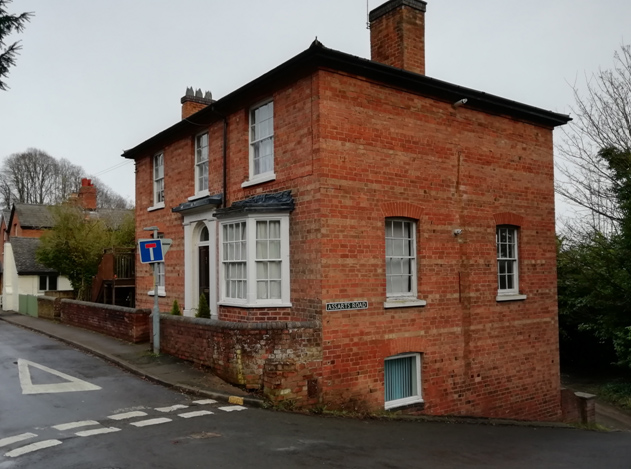
The ‘Old Hall’ halfway up Assarts Road is a small, but intriguing building which was used for a number of purposes in the 20th century before becoming part of a dwelling. In the 19th century it was mainly for religious use and all of the following references appear to be related to this building.
From the mid 1870s services were being advertised at the “Brethren’s Meeting Room” in Malvern Wells and in the 1880s at the “Schoolroom”. The 1861 census notes a “Wesleyan Chapel” half way up Assarts Road (but this is probably mis-named) and in 1901 a “Gospel Mission Room”. It stood at the end of a row of dwellings known as Pomona or Chapel Cottages. The entry in Littlebury’s Directory of 1905 reads “Assarts Schoolroom – Service on Sundays at 11 a.m. and 6.30 p.m.; Bible Reading on Wednesdays at 7.30 p.m.” and the 1905 OS Map labels the building as “Mission Room”. Kelly’s Directorys of 1912 and 1916 refer to a “Gospel Hall” in Upper Welland, but by 1921 “a Gospel Hall now used as a Women’s Institute”. It is unlikely that it ever was used as a Wesleyan chapel.
In 1913 the General Valuation Survey noted that the Gospel Hall had just one room with a boarded floor and a small porch and was leased for 21 years from 1893 to a Mr Woodward by Miss Diana Grubb. James Woodward lived in the cottages just below the hall and was presumably a member of the Brethren. There are various types of Brethren denominations. Given the use of the term Gospel Hall they were probably ‘Open Brethren’. Each church is considered a separate congregation, but there may have been some connection with the Gospel Hall in North Malvern. The Brethren do not have ministers.
Gospel Hall
Non-Denominational Missions
It is likely that there were rallies and missions in the area in the 19th century. There are two which are documented in Welland: one temporary and one more permanent.
Lady Henry Somerset was a philanthropist and temperance campaigner. She inherited the Eastnor estate and moved there in 1883 and launched a series of missions in Ledbury and the local area. In August 1887 her Gospel tent was in Welland. The Worcester Journal reported one of the meetings which was crowded and impassioned as “her ladyship… pressed people to accept the water of life freely asking them if the death bed was the time to find Christ”.
George Nesbit moved to Welland in 1877. He had previously been a Town Missionary in Berwick. He rented Hill View on Kings Road which had previously been the Wells Hotel. Sunday Services were advertised at the “Mission Rooms (Hill View)” during the 1880s. The censuses in 1881 and 1891 note George as “Missionary Minister” and “Scripture Reader”. George’s obituary in 1904 read, “Although he belonged to the Established church, he worked independently of any denomination…”. The house was put up for sale in 1896, “’Hill View’, containing 1 large room, formerly used for religious and other meetings”.
Hill View
Conclusion
The extent to which faith and religion were an integral part of the life of our forebears is easy to underestimate. The zeal of believers, as well as their commitment to a particular denomination, might seem alien to us in the 21st century. Over the years Welland saw a rich variety of nonconformist meeting places in homes or purpose-built structures. Denominations such as the Quakers or Baptists, which are characterised by more permanent buildings and burial grounds, are not represented, but this is not unusual for a rural parish such as Welland.
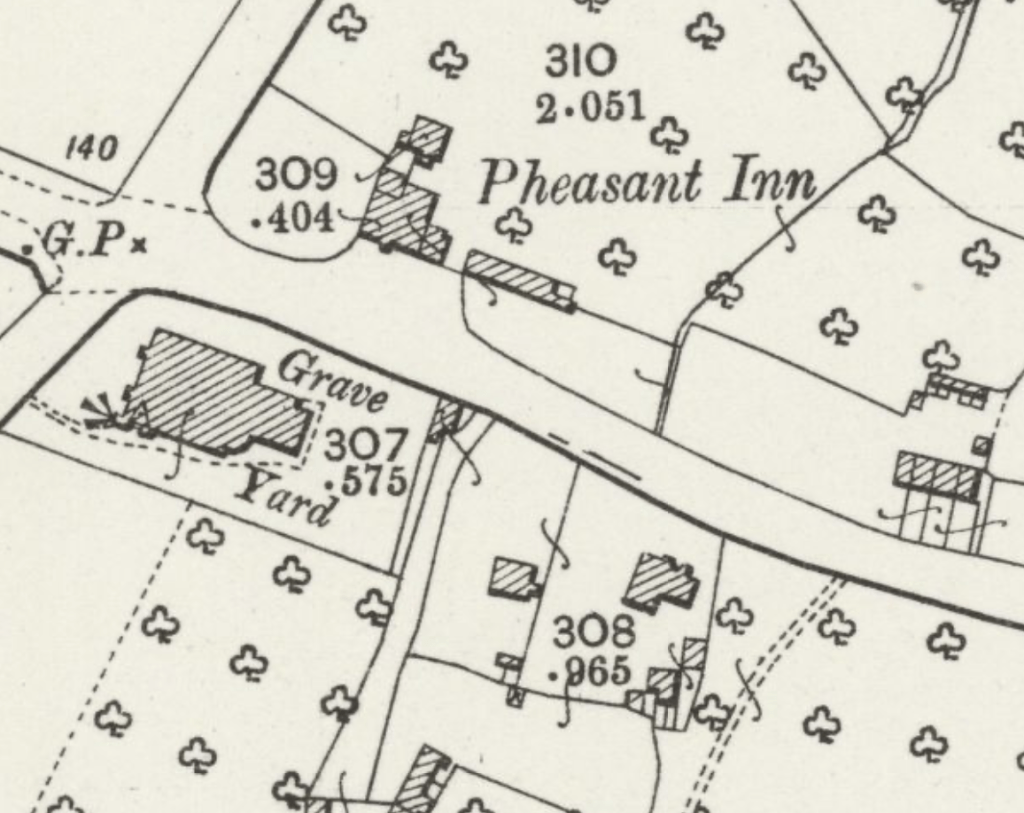
For a long time, the house on this site was the last one in Drake Street before Welland Common, hence the old name of ‘Streetend’. This name goes back at least to the manor of Welland rental of 1559 that refers to ‘the house at the Stretend’.
Streetend was a copyhold property belonging to the manor. Copyhold tenants owed specific duties towards the lord of the manor, the Bishop of Worcester, and were entitled to a copy of the title deed as recorded in the manorial court roll. Changes of tenancy were granted at the manorial courts. For example, at the court held in April 1633 it was reported that ‘Elinora Careles who held from the lord according to the custom of the aforesaid manor a cottage with curtilage called Streetend with two acres of land lying in Welland had died since the last court whereupon a heriot of 3s 4d fell due to the lord’. A heriot was a fee payable to the lord of the manor on the death of a tenant. The report goes on to say that Thomas Smith (possibly a relative) wanted to take over the tenancy and it was duly granted to him.
Fire & rebuilding
From later manorial correspondence it appears that the house partly burned down. A letter of 1807 from a Mr Bound reads, Yesterday I held court at Welland … I went over to look at Joseph Wagstaff’s cottage & premises he has rebuilt one end but it is a very indifferent place …’. Joseph Wagstaff took over the tenancy in 1789. The name Streetend seems to disappear about this time so perhaps it had fallen out of use by then.
We do not know whether the house that was burned was the one referred to in 1559 or a replacement.
By 1847, the tithe records show that the house and garden were owned by John Ward and occupied by Henry Wagstaff. The tithe map shows a small rectangular house in a comparatively large plot.
There should be references to the house in the 19th century census returns but unfortunately most of the Drake Street properties are not identified by name, making it difficult to match census entries with particular houses. Using the combination of census and land tax records, however, it is possible to identify some of the later occupants for Streetend.
George Jenkins
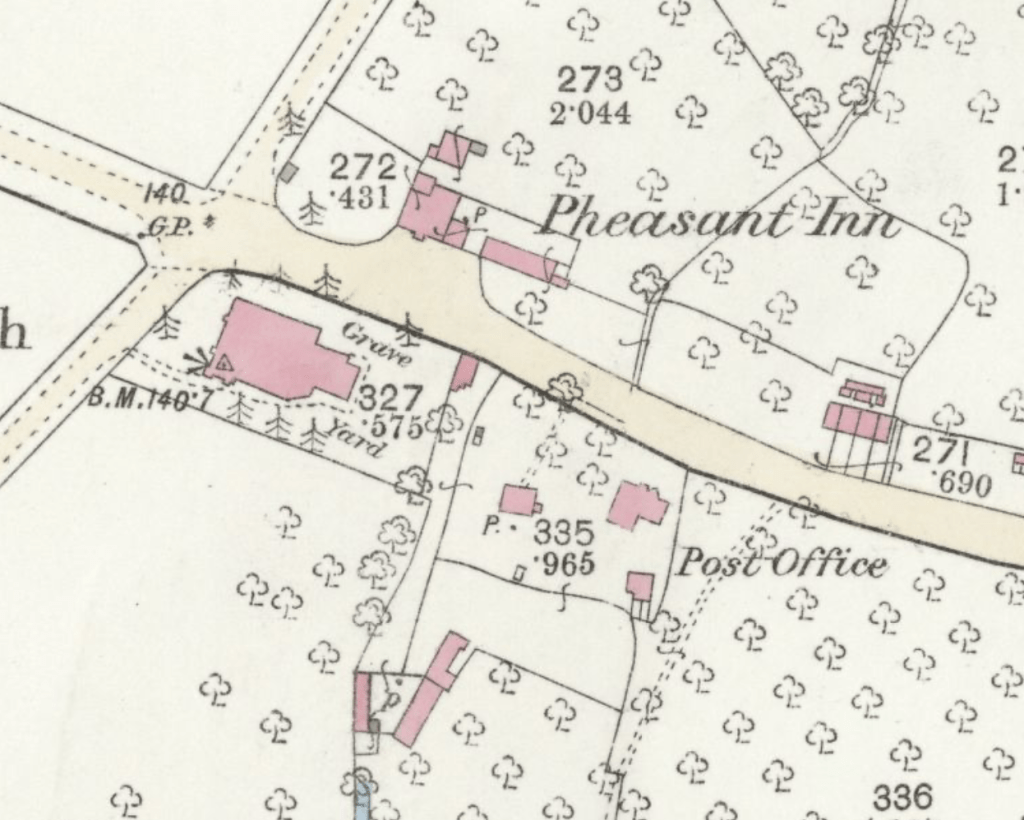
OS 1886 map showing Poplar Cottage (left) and the Post Office (both within plot 335). Reproduced with the permission of the National Library of Scotland
The OS map published in 1886 shows the plot had another building on it, the post office, as well as the cottage. George Jenkins, grocer and postmaster, owned both buildings and some of his tenants at the cottage can be identified.
Ann Symonds/Simmonds
1881, 1883
William Bridges
1885-1888
Thomas King
1889-1891
Thomas & Elizabeth Bickley/Beckley
1901
OS 1904 map showing the divided plot Reproduced with the permission of the National Library of Scotland
The 1904 map indicates the plot had been divided between the two properties. This may have been the first time in its long history that the Streetend two-acre plot had been reduced.
Mary Jenkins
The Valuation Office survey of 1910 describes the cottage as
‘Cottage & land 37 perches Brick and Tile in Fair Repair Kitchen, Back Kitchen & Washhouse 2 Bedrooms Outside: Privy, Pigscot, Shed & Pump’
The owner was O B Cowley (probably Oswald Beach Cowley, an Upton solicitor) and the occupier M A Jenkins. This is Mary Ann Jenkins, widow of George Jenkins, and she was still there for the 1911 census.
William Stanley
Stevens Directory of 1928 names William Stanley as the occupier of Poplar Cottage and this is the earliest reference to the current house name found so far. In 1921 William Stanley was living in Drake Street but it is not clear whether he was at Poplar Cottage or still at Church Cottage, next door, where he was recorded in 1911. William was a labourer at Cutler’s Farm, his wife Sarah was charwoman for Rose Pudge at the Pheasant Hotel and the house had four rooms. The couple had two young sons, Frederick and Charles.
William and Sarah were still living in Poplar Cottage in September 1939, when the National Register was compiled. By this time, they were in their 70s, with William working as a gardener. Frederick, in his late 20s, was still living there. He delivered letters and telegrams and was also a ‘part-time poultry man’.
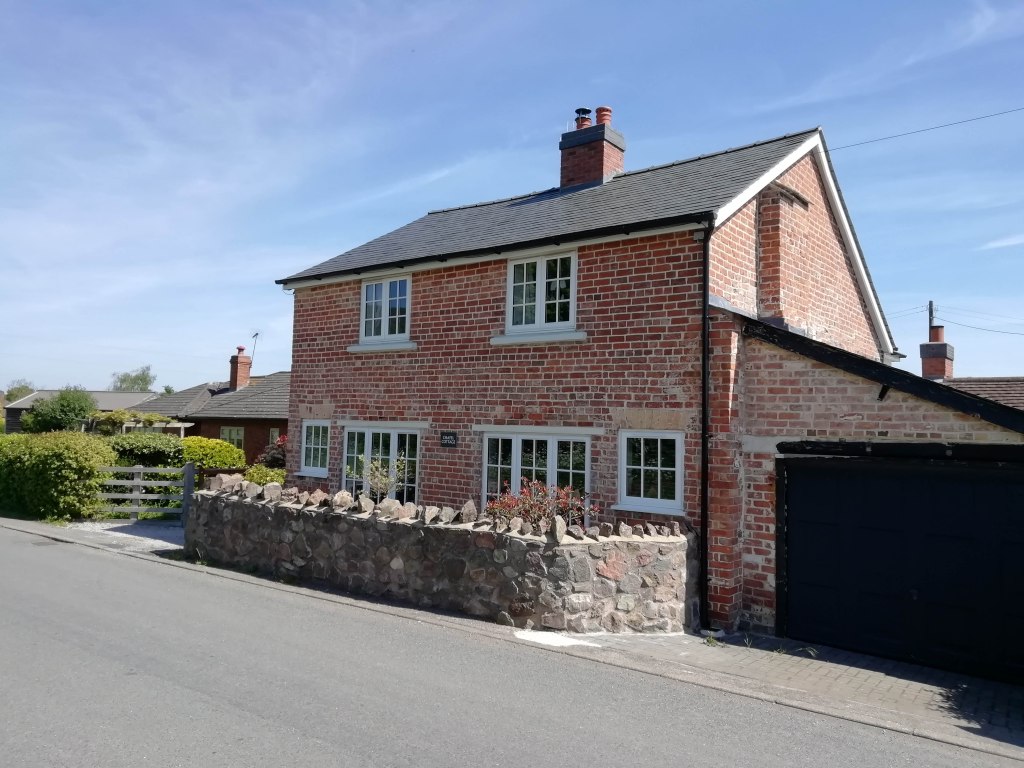
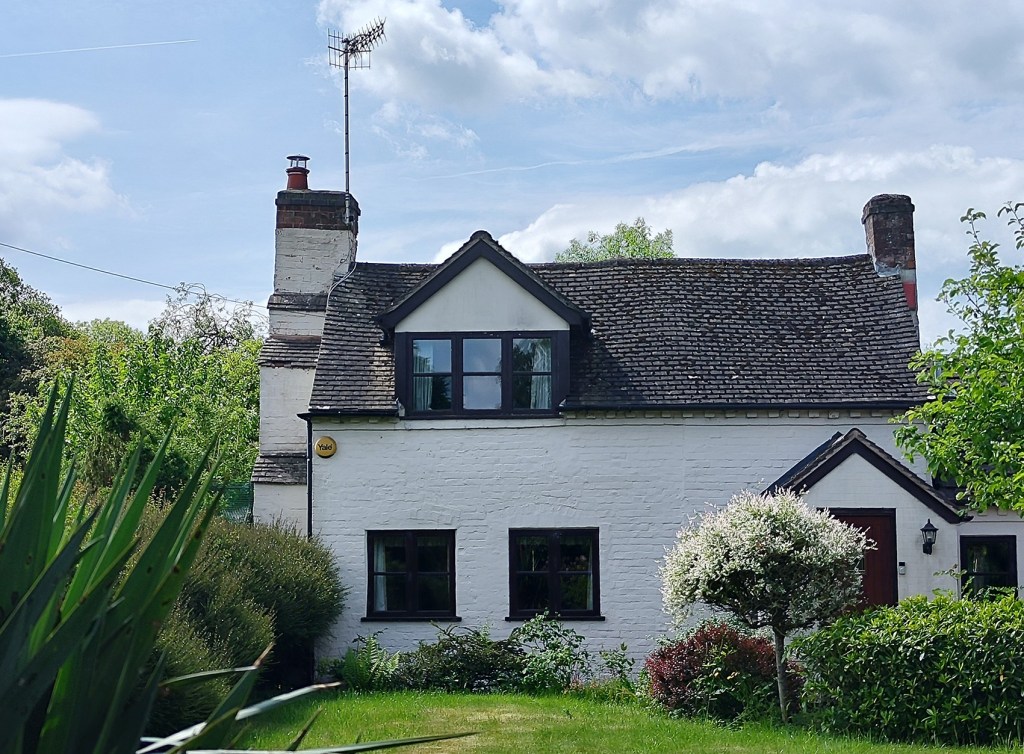
Poplar Cottage today
Looking at the house today, there is a sturdy chimney stack at one end and the roof ridge has a slightly wavy line, suggesting the presence of old timbers. A vertical line is just visible on the white paintwork between the downstairs windows and the porch. This might indicate the division between the remains of the original house (on the left) and the section built after the fire in the early 19th century.
The modern house is larger than it looks from the front, having been carefully extended at the rear and on the first floor.
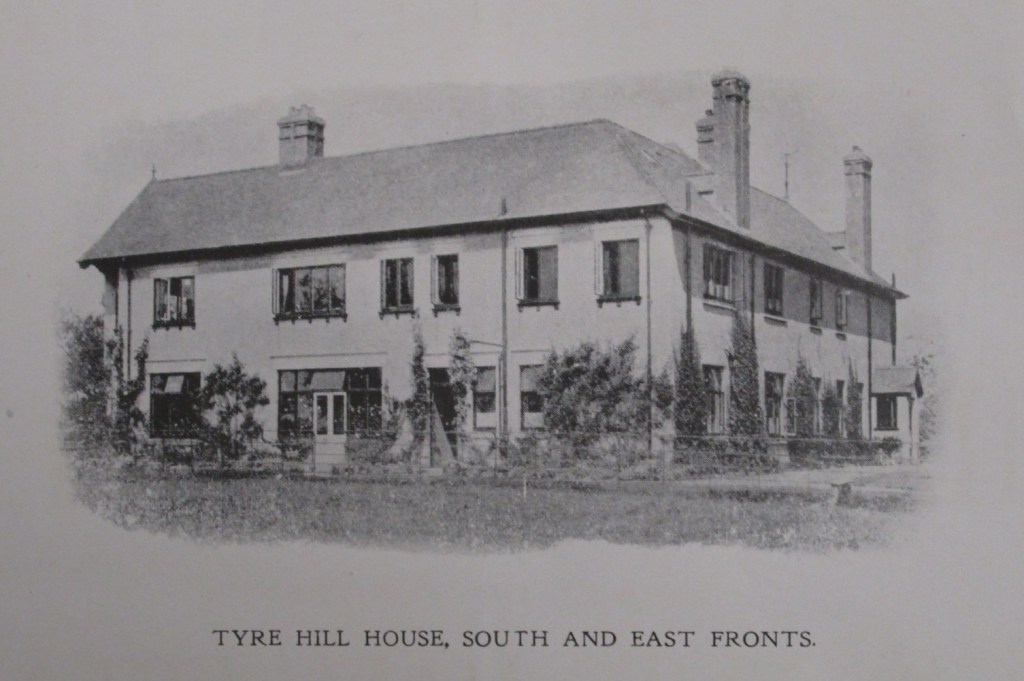
Tyre Hill House lies east of the B4208 (Welland Road) close to the boundary with Hanley Swan. The modern house is very different from the original house and associated farm buildings that survived until the late 19th century. These seem to have been close by, north-east of the current house.
The earliest known occupants of the Tyre Hill estate are the Badger family, whose names occur in the 16th and early 17th centuries. ‘Roger Bager’ appears in the Little Malvern Priory 1537 rental recorded at the time of the dissolution.
Giles Nanfan rented Tyre Hill in the mid-17th century. (The Nanfan family held the manor of Birtsmorton from 1424-5 until 1771.)
We get a glimpse of the house itself from owner William Chamflower’s will of 1709. The inventory mentions a kitchen, hall, great parlour, little parlour, ‘chamber next garden’, cheese chamber, buttery and malthouse, plus two chambers upstairs and a loft. The total value of the house contents and farming equipment, stock and crops, came to £782 7s 10d, showing Tyre Hill to be the property of a well-to-do gentleman.
Richard Randle, a later tenant to owner Mrs Baylis, gave up the estate in 1814 and an auction of farming stock was duly advertised: ‘Valuable Farming Stock, Implements in Husbandry, fine flavoured Cider and Perry, large Rick of Old Wheat, some Household Furniture, and other Effects’.
The Davis family of Hanley Hall owned Tyre Hill from the 1830s to 1901. The 1841 census shows the occupants of the house at ‘Tire Hill’ were John Drinkwater, agricultural labourer, and his wife, Nancy.
Possibly the same John Drinkwater was the occupier mentioned in Welland’s tithe records a few years later. He had the use of the house and garden while owner William Davis managed the agricultural land. The fields belonging to the estate were named as: the Forty Acres, Tire Hill Fold and Buildings Orchard, Cow Pasture, Red Hill, Tire Hill Orchard, part of a coppice, Flashers Ground, Broad Meadow, Gilliver Lane Ground, The Orles and the Old Hopyard. The tithe map shows the house and its fold of farm buildings a short distance north-east of the current house.
In the 1861 and 1871 censuses John Davis, carpenter and wheelwright, and his wife Mary Ann, were living there and there were probably labourers in occupation in 1881. There are no entries in the census for 1891 and 1901 so perhaps the house was no longer habitable or had been taken down by then.
A new chapter began in the estate’s history when Edward St Lawrence Walker, originally of Birstall Holt, Leicester, bought the Hanley Hall estate in 1901, and built a substantial house on the Tyre Hill site for his own use. He was a noted horse breeder and former Master of the Croome Hounds. Walker did not live to enjoy his new home for long as he died in March 1908.
Tyre Hill was then sold as part of the Hanley Hall estate in July the same year. The sales brochure describes a spacious seven-bedroomed house and includes mention of the house’s well, about 60 feet deep, from which water could be pumped and stored in cisterns in the roof of the house. The brochure also describes the entrance lodge on the Welland Road as newly built. The whole Hanley Hall estate was bought by Francis William Romney, a solicitor in Malvern. He seems to have rented out Tyre Hill but was living there himself in the late 1920s.
According to the 1921 electoral register, Tyre Hill Lodge was occupied by Lucie Jarrett, district nurse and midwife for Hanley Castle Nursing Association, and her boarder Sophie Hooke.
By the 1930s William Edward Charteris Watkinson, originally from Yorkshire, was living in the big house and running the farm. During WWII the house was sequestered for the war effort as a billet for troops. Watkinson joined the Home Guard and returned to live in the house after the war. He had an engineering degree and was keen on cars and steam trains as well as farming. He died in 1981.
Over the last few decades, the 1901 house has been extended and modernised. The surrounding land is now used by a livery yard.