Welland’s 1847 tithe apportionment refers to a “House and Wesleyan Chapel” on the site of the present Chapel Cottage[s] (see map). This has caused some confusion with local historians as the building was described as a “School Room” and the denomination as “Independent” by the owner in the 1851 Ecclesiastical Census and had been such for some years. We can find no suggestion that this site was ever Methodist.
The earliest reliable reference we can find to Methodism in the area is in the Newent Circuit plan for June 1837, to the Malvern Wells Society (with two members.) At Midsummer 1840 the list of Societies included Welland (four members, leader W. Hart).
We find a reference to Mr Deveaux of Welland giving £1 towards the expenses of erecting a chapel of Birtsmorton, which was opened in 1844. And in December 1840, James Etchells, who was the Circuit minister based in Ledbury, registered the home of Robert Devereux (Mr Deveaux?), who was a shopkeeper at what is now known as Holdfast Cottage (see map) as a “place of religious worship”. There would have been regular preaching there, although this must have happened for only a relatively short period as there are no Wesleyan meeting places in Welland in the 1851 Ecclesiastical Census and Robert had moved by then. By Michaelmas 1847 the Welland Society had disappeared from the records. The societies were very fluid in those days, appearing and disappearing over the years as membership waxed and waned and was absorbed into other nearby societies.
The Malvern Circuit came into being in 1863 and there will have been a repositioning of Societies into the new circuit. In 1873 Malvern Wells is listed in the new circuit, meeting in a dwelling house and having 20 sittings.
By July 1877 conversations had begun to find a more suitable place for worship and by July 1878 land had been purchased at “Malvern Wells” at a cost of £30, the site of the present Methodist Church (see map). However, circuit records show that the circuit came under financial strain “greater than it can bear” and in 1885 the land was transferred to the Ledbury Circuit “in order that the building of a chapel may be proceeded with in connection with that circuit.” The chapel did not return to the Malvern Circuit until 1973.
The trust deed for the Malvern Wells was signed in 1878 (eight years before the building was erected). Thomas Chadney & Son were the builders. Chadney had been listed as the Society leader in the return for December 1886 and T. Chadney appears as the first Trustee. Appropriately enough his skill is listed as “builder”. It is clear that he was instrumental in building the present chapel at Upper Welland as we have a newspaper evidence of June 1886 of him getting fined for leaving chapel building materials on the highway!
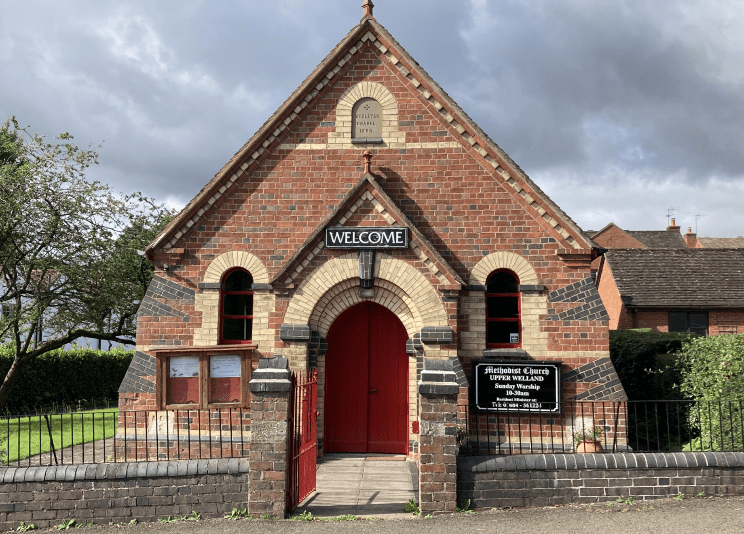
An article in the Malvern Advertiser of the time of the chapel’s opening described it as “a neat but unpretentious structure of brick, with stone facing, and is to accommodate 120 persons.” Pevsner’s guide to the buildings of Worcestershire includes a listing for the chapel and notes that its brickwork has “ample yellow and blue trim; round-arched openings on the entrance front, pointed side windows.”
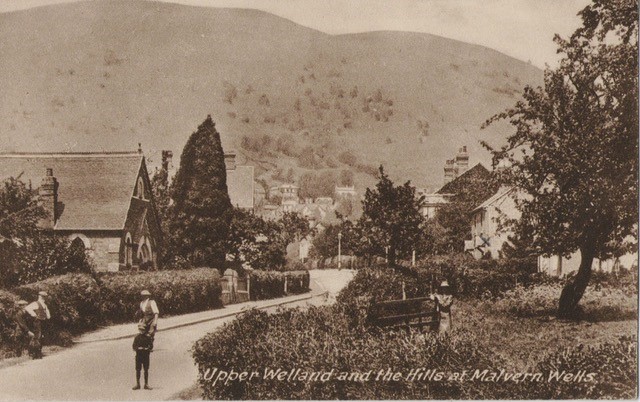
It was not until 1923 that the Society is first referred to as “Malvern Wells (Upper Welland)”. Between 1947 and 1951 this changes again to “Upper Welland (Malvern Wells)”. The majority of the members of the society in 1905 did not live in Upper Welland. By 1920 all of them lived in the village. This perhaps gives some justification for the subtle change of name of the society on the plan in the 1920s.
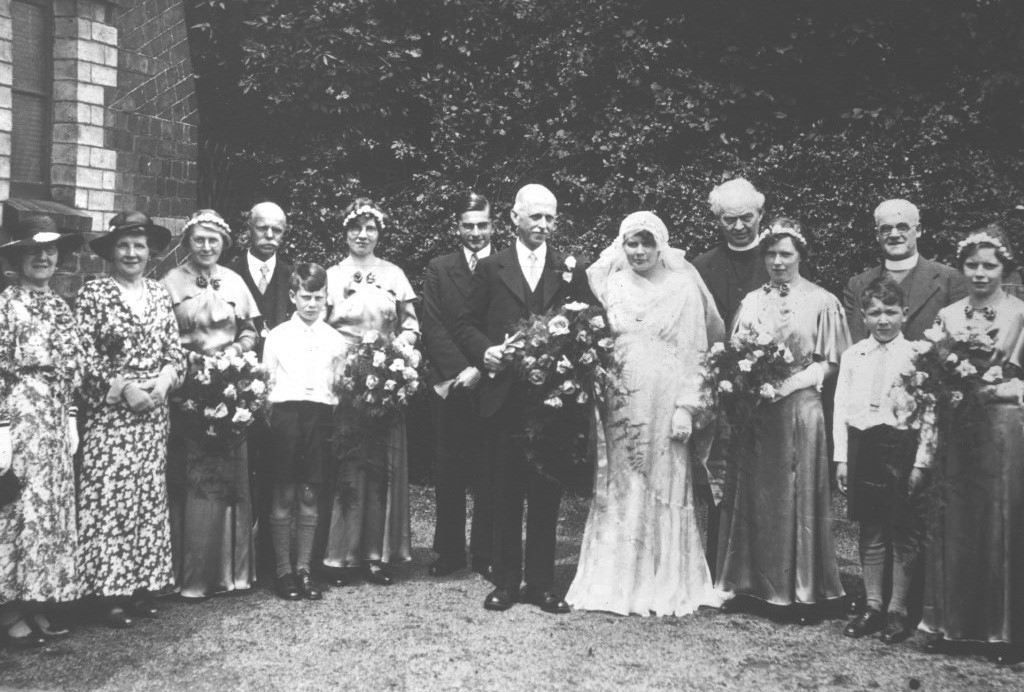
A schoolroom and vestry of corrugated iron were added sometime in the 1920s. In the early days the Chapel was heated by means of a tortoise stove using coal and coke. The original lighting was by gas, with electricity arriving in 1924. Mains water came to the chapel in 1978/79 followed by a kitchen installation and flush toilets.
The development of Upper Welland Chapel was, like many non-conformist churches, enabled and supported by individuals. In 1976 Mary Tibbles (church pianist) donated a piece of land to the rear of the building and another to the east in 1992 to enable a rebuild of the school rooms and vestry area. Major renovation work on the chapel itself also took place. The church hall is dedicated to Margaret Davis, long term member and supporter of the church.
The church is still active, with worship services every Sunday morning at 10:30am.
Note: “Welland, Lower Hook” Methodist chapel was erected in 1894, an iron chapel with 100 sittings, but this is clearly stated as being in the parish of Upton upon Severn so is not actually a Welland church. The last act of worship took place there on 26th July 1903.
 Exploring Welland