For virtually a millennium leading up to the beginning of the 16th century, the church in Britain was part of the see of Rome, recognising the Pope as its primary authority. There were, however, an increasing number of those who protested that the official church, in accepting certain theology and practices, had lost the true essence of the Christian faith. The complex story of the Reformation in England resulted in the breaking away from Rome by the church in England and the formal acceptance of these Protestant ideals. This new church inherited all of the existing parish structure and buildings, becoming known as the Anglican or Established Church, the Church of England.
Despite persecution, some continued to practise their Catholic faith in secret or under great duress. The significant role of Catholics in the history of Little Malvern and Welland is not covered here and requires a separate research article.
Since the Reformation, there have been many Protestant groups who have found themselves at odds with the Established Church and have developed their own practices and forms of worship. Whilst mentioning a range of nonconformist denominations this article does not attempt to describe them in any detail.
Rod Ellis’ book “Dissenters All!” demonstrates the variety and prevalence of nonconformist chapels across the Malvern area. The only surviving religious building still used for nonconformist worship in Welland is the Methodist Chapel in Upper Welland. The story of the chapel also covers the history of Methodism in Welland.
This article explores other strands of nonconformist faith and worship in Welland. The evidence for these individuals and their meeting places is often fragmentary, but taken together shows that dissenters were a significant presence in the parish.
Early Dissenters
A series of Churchwarden presentments from the 17th century provide the first glimpse of individuals who refused to worship in the Anglican Church of St James. In 1663 James Surman and his wife, widow Fellis and Ann Pratt did not “com to the publike”. This might have meant absence rather than dissent. The only person formally identified as a dissenter among the papers is Thomas Luddington who appears in the presentment of 1676. It is not clear why he was not named in other years. All of these individuals were of independent means and could weather any strictures that might have been applied to them. Thomas Luddington was not a Catholic, but the form of his dissent is not known.
Early Meeting House Registrations
Following the Toleration Act of 1689 it became legally permissible for dissenters to meet in public, provided that their meeting houses were officially registered. The first such that has been found for Welland was in 1788 when six men registered the “…dwelling House now in the occupation of William Purser”. This was probably Danemoor Farm. In 1818 Thomas Williams, who lived in the house called Brookend, registered a “…building part of his dwelling house… intended forthwith to be used as a place of religious worship by an assembly or congregation of Protestants…”. The nature of these assemblies is not made explicit and it is not known how long these properties were used as places of worship.
From the late 1820s things become somewhat clearer. The growing tensions between the various churches and denominations are revealed by the 1851 Ecclesiastical Census. The Curate of St James, Rev. Other Philpott, noted only 70 adults and 38 children (less than a quarter of the population) attended service on the day of the census and complained, “It may be observed that the Church, standing at the extreme boundary of the Parish, a large proportion of the Welland parishioners attend other churches”. There does not seem to have been much love lost with Benjamin Onions, who submitted a return for the Independent chapel in the parish, complaining that in 1835 the numbers of children attending the Sunday School had dropped significantly “… by the influence of the Established Church”.
The Independent Chapel and the Countess of Huntingdon’s Connexion
In 1830, the house of Boaz Wadley was registered by Protestant dissenters Boaz Wadley, Benjamin Onions and Richard George. This is now known as Day’s Farm. There is a link between this meeting place and the Countess of Huntingdon’s Connexion. The Wadleys and the Georges had their children baptised in their chapel in Great Malvern. The Education Return of 1833 noted that the Huntingdonians provided for the Sunday School and Bentley’s Directory of 1840 advertised “…a chapel in Malvern Wood occupied by the Lady Huntingdon’s Society, which will seat 120 persons”.
In the Ecclesiastical Return of 1851 Benjamin Onions untangles some of the history, but raises more questions in the process. He notes that “…before 1834 two rooms were rented for Sunday School and Service”. This was probably at Day’s Farm. The Independent meeting place that he described in 1851 was built in 1834 and, although known as the ‘School Room’, was used exclusively for worship and could hold 50 (although the general attendance was 40). Although it had been supported by the Huntingdonians in the past he noted “Services conducted by various village preachers of different denominations”.
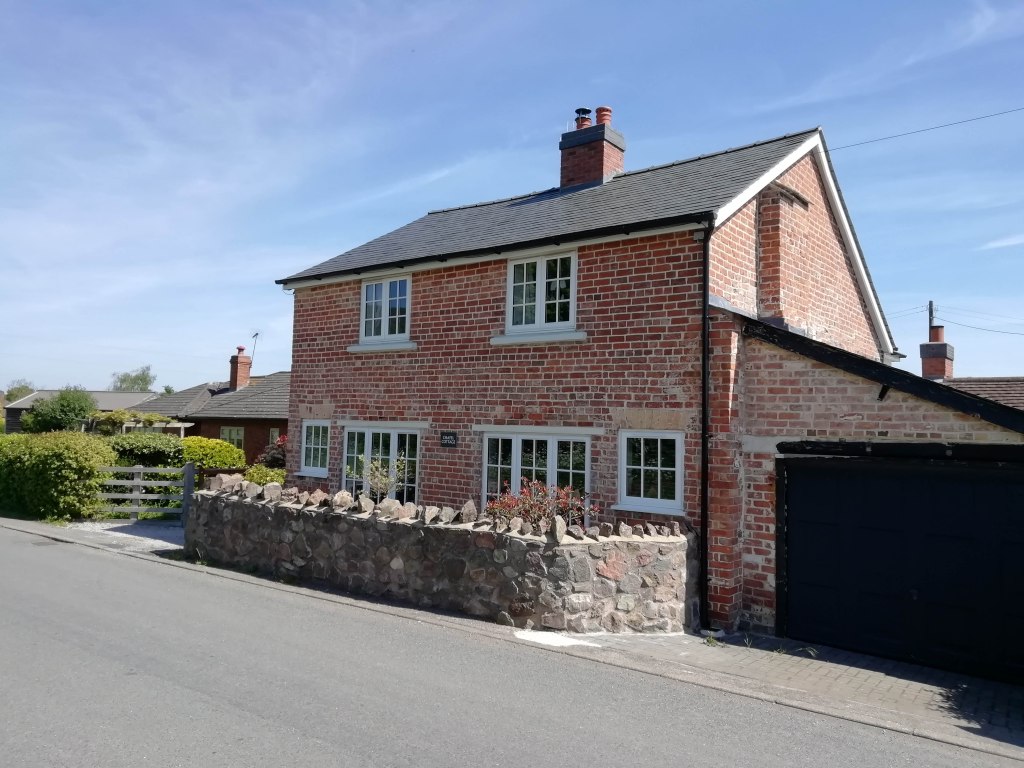
Identifying the location of the chapel/meeting house and school room has generated considerable research. Boaz Wadley moved from the farm in 1835 which presumably prompted the construction of a new meeting place. Benjamin Onions was a shoemaker and lived at Midsummer Cottage prior to his father’s death in 1838 and the 1847 Tithe Map shows a cluster of buildings owned by him. One is a building where Chapel Cottage now stands and was described (misleadingly) as “House and Wesleyan Chapel”. Chapel Cottage was originally a pair of cottages which had very small rooms. It is more likely that Vero Cottage (now demolished) was the purpose-built chapel. Former local residents remember that it had a very large room at the front with open stairs and a big double-door on the side closest to Chapel Cottage. The residents in the 20th century did not use this room as it was too big to heat. The School Room may have been where the garage of Chapel Cottage now stands as it is shown as a larger structure on late 19th century maps.
The 1861 census for Welland notes a “Small Independent Chapel” next to a shoemaker’s shop in this vicinity. Noake’s Guide to Worcestershire published in 1868 states in the section on Welland that ” …the Dissenters have a small chapel in the parish.” This is the last mention of the chapel in Welland. Benjamin Onions had died in 1863 and the meeting place faded soon after.
The United Brethren and the Influence of the Latter Day Saints
It is possible that some of the village preachers invited by Benjamin Onions to lead services at the Independent chapel were from the United Brethren. The key mover and shaker of the United Brethren was Thomas Kington. He appears to have been expelled from the Primitive Methodists in about 1833 and soon after began preaching all around the Malvern Hills. He registered dozens of cottages as meeting houses including in Malvern, Upton and on Castlemorton Common. Although a very local denomination they attracted a lot of followers in the rural parishes immediately around the hills.
In 1840 a mission from the Latter Day Saints in the US arrived in Herefordshire led by Wilford Woodruff and, according to their records, the leaders of the United Brethren and most of their congregations converted to Mormonism. Many of these folk then emigrated to Utah during the 1840s.
Woodruff’s journal entry for 22 May 1840 describes walking over the Malvern Hills from Herefordshire and dining with Brother Samuel Jones. This is probably the Samuel Jones who was living at Lombard Tree farm. Samuel Jones was made an elder and was responsible for five of the local congregations of Latter Day Saints (although none in Welland).
Henry Jones (not closely related to Samuel) was apprenticed to Benjamin Onions in Welland as a shoemaker aged 16 in 1831 and stayed there until at least 1836 when he set up business in Malvern Link. His parents and other members of the family were converted to Mormonism and they emigrated in 1844. Their letters to Henry tried to convince him of the need to convert and pleaded with him to join them, but he never did.
Brethren and the Gospel Hall
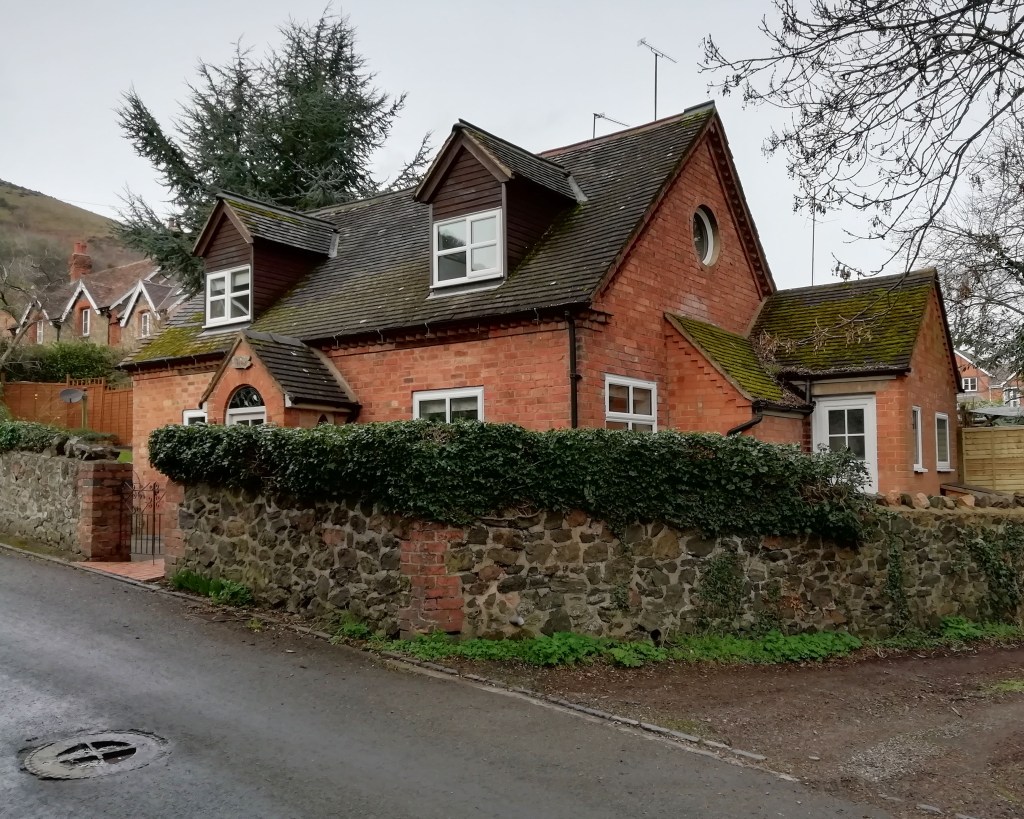
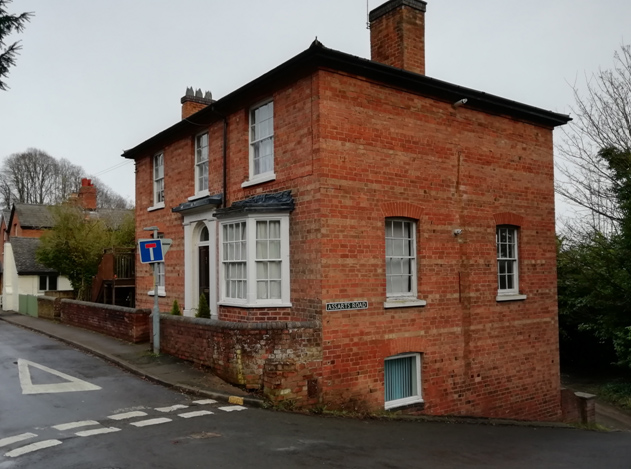
The ‘Old Hall’ halfway up Assarts Road is a small, but intriguing building which was used for a number of purposes in the 20th century before becoming part of a dwelling. In the 19th century it was mainly for religious use and all of the following references appear to be related to this building.
From the mid 1870s services were being advertised at the “Brethren’s Meeting Room” in Malvern Wells and in the 1880s at the “Schoolroom”. The 1861 census notes a “Wesleyan Chapel” half way up Assarts Road (but this is probably mis-named) and in 1901 a “Gospel Mission Room”. It stood at the end of a row of dwellings known as Pomona or Chapel Cottages. The entry in Littlebury’s Directory of 1905 reads “Assarts Schoolroom – Service on Sundays at 11 a.m. and 6.30 p.m.; Bible Reading on Wednesdays at 7.30 p.m.” and the 1905 OS Map labels the building as “Mission Room”. Kelly’s Directorys of 1912 and 1916 refer to a “Gospel Hall” in Upper Welland, but by 1921 “a Gospel Hall now used as a Women’s Institute”. It is unlikely that it ever was used as a Wesleyan chapel.
In 1913 the General Valuation Survey noted that the Gospel Hall had just one room with a boarded floor and a small porch and was leased for 21 years from 1893 to a Mr Woodward by Miss Diana Grubb. James Woodward lived in the cottages just below the hall and was presumably a member of the Brethren. There are various types of Brethren denominations. Given the use of the term Gospel Hall they were probably ‘Open Brethren’. Each church is considered a separate congregation, but there may have been some connection with the Gospel Hall in North Malvern. The Brethren do not have ministers.
Non-Denominational Missions
It is likely that there were rallies and missions in the area in the 19th century. There are two which are documented in Welland: one temporary and one more permanent.
Lady Henry Somerset was a philanthropist and temperance campaigner. She inherited the Eastnor estate and moved there in 1883 and launched a series of missions in Ledbury and the local area. In August 1887 her Gospel tent was in Welland. The Worcester Journal reported one of the meetings which was crowded and impassioned as “her ladyship… pressed people to accept the water of life freely asking them if the death bed was the time to find Christ”.
George Nesbit moved to Welland in 1877. He had previously been a Town Missionary in Berwick. He rented Hill View on Kings Road which had previously been the Wells Hotel. Sunday Services were advertised at the “Mission Rooms (Hill View)” during the 1880s. The censuses in 1881 and 1891 note George as “Missionary Minister” and “Scripture Reader”. George’s obituary in 1904 read, “Although he belonged to the Established church, he worked independently of any denomination…”. The house was put up for sale in 1896, “’Hill View’, containing 1 large room, formerly used for religious and other meetings”.
Conclusion
The extent to which faith and religion were an integral part of the life of our forebears is easy to underestimate. The zeal of believers, as well as their commitment to a particular denomination, might seem alien to us in the 21st century. Over the years Welland saw a rich variety of nonconformist meeting places in homes or purpose-built structures. Denominations such as the Quakers or Baptists, which are characterised by more permanent buildings and burial grounds, are not represented, but this is not unusual for a rural parish such as Welland.
 Exploring Welland