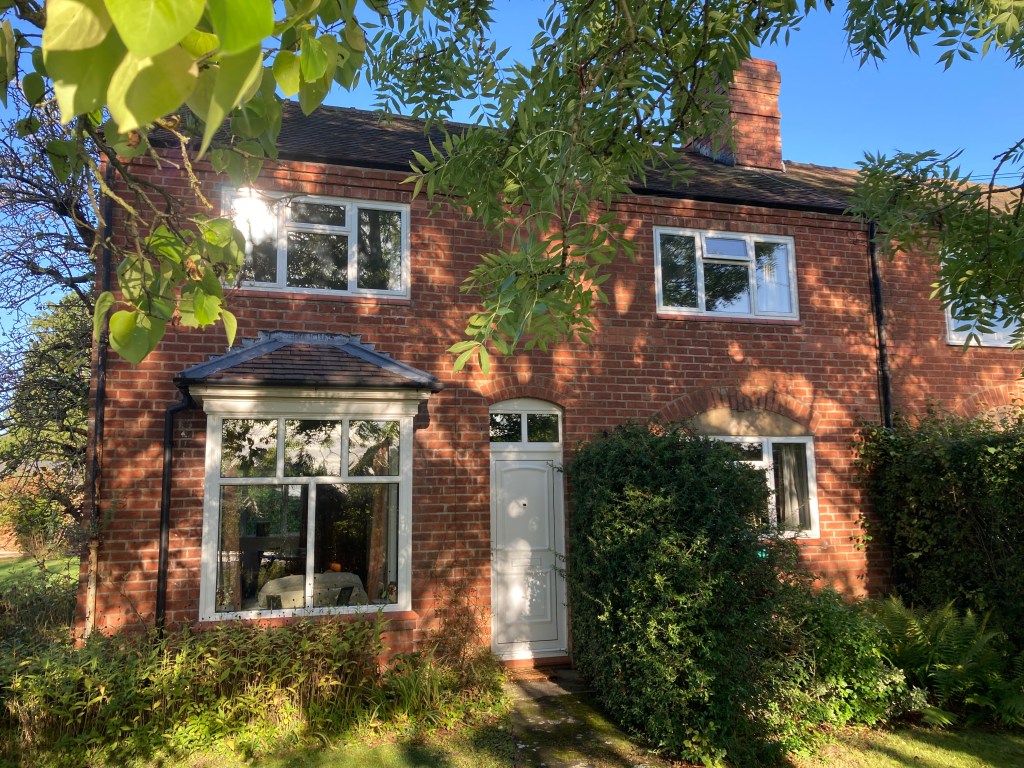
Nos. 1 and 2 The Laurels are a pair of double-fronted semi-detached brick villas on the Gloucester Road, built in the 1890s. This section of the road between the crossroads and the common was still very rural at the time. The 1904 OS map shows that only three properties then fronted the west side of the road: Boundary Cottage, The Laurels (at position 332) and Summerfield, the rest of the land being fields.
Amongst the families who have occupied these houses are the Godwins at no. 2, who were in residence by 1921. Ernest Godwin was originally a wheelwright but worked for many years in Welland as a carpenter, builder and undertaker, building everything from pig huts to air-raid shelters to houses.
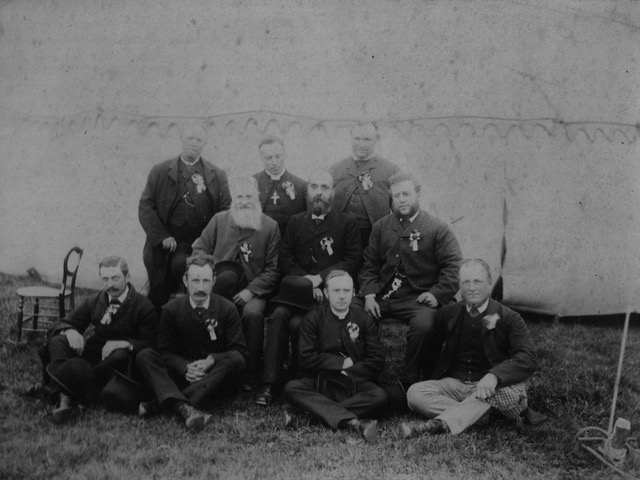
The Worcestershire Chronicle and Worcester Journal of 4 June 1887 published long, detailed accounts of the recent celebrations held at Welland to mark Queen Victoria’s Jubilee, the 50th anniversary of her accession. Following a thanksgiving service at the church in the morning, the villagers moved to the adjoining field, part of which is now Purser’s Orchard, lent by Mr James H Purser of Woodside. A marquee 158 feet long accommodated 400 people, who sat down at 1.30 pm to a lunch of cold beef, veal, potatoes, plum pudding, beer and cider. Flower and fern decorations adorned the tables. Speeches were made and toasts drunk. Vicar of Welland, the Rev John M Donne, praised the ‘kindness, love and womanly devotion of the Queen‘ and claimed that ‘their children’s children would look back to the Victorian half century as the most glorious time in the history of this country.’ Colonel Sir James Johnstone declared that ‘during the last 50 years there has been more progress in morals, in religion and in the general welfare of the country than in any other 50 years in the history of the world’.
Tea was served at 4.00 pm to the 300 children of the parish. Various ‘old English games’ followed and there were merry-go-rounds, dancing on the green and swingboats plus a programme of races for the men and children. The band of the Worcester Regiment and the Upton Brass Band accompanied the day’s proceedings. A fireworks display rounded off the evening.
Funds for the event were raised by subscription and it was organised by the Rev Donne and the two churchwardens, Mr Ludford Docker of the Old Vicarage and Mr James H Purser. The ladies’ committee of Mrs Davis, Mrs Purser, Mrs Dent and Mrs Donne organised the tea and were also responsible for making 250 lbs of puddings and cooking the beef, this being done at Woodside. Mrs Ketteringham, landlady of The Pheasant, also provided refreshments.
Welland was reported to be the first village in Worcestershire to celebrate the Queen’s Jubilee and the Rev Donne explained that this was because the people of Welland ‘were so overflowing with loyalty that they could not wait’. Events in other villages and towns took place around 20 June, the Queen’s actual accession date.
The men’s committee. Front row, 2nd is Ludford Docker, 3rd the Rev John M Donne and 4th James H Purser. Photo provided by Mary Purser
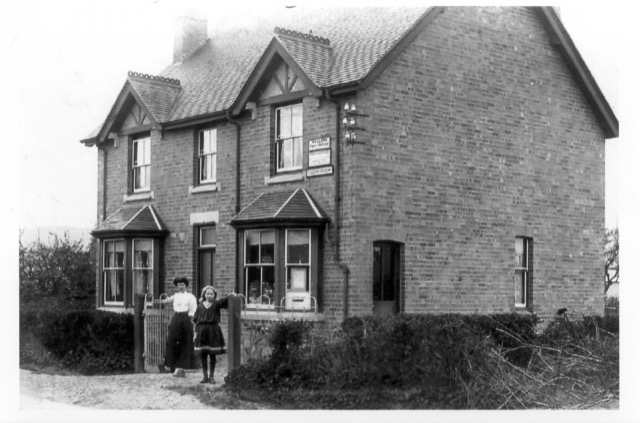
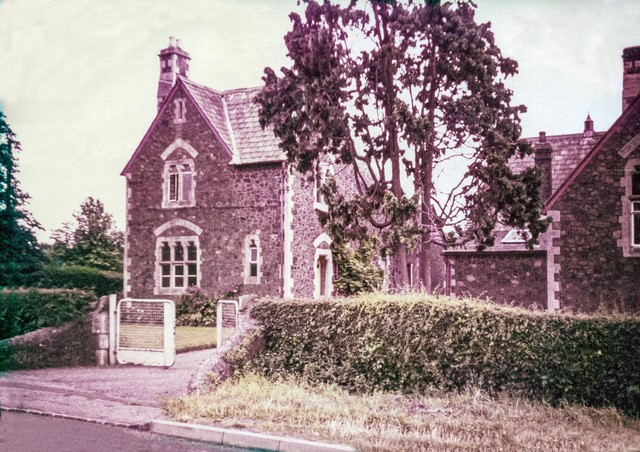
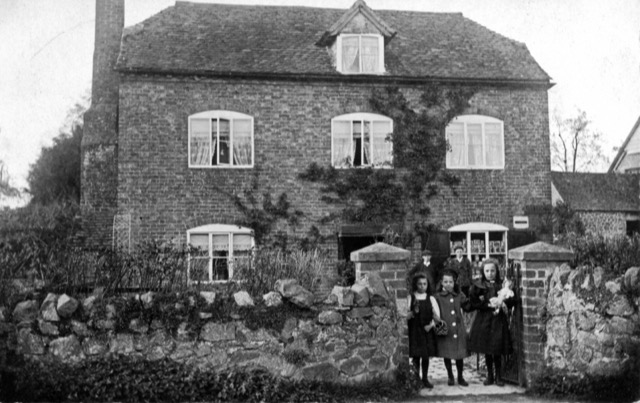
Thomas and Alice Pullen ran the village post office from about 1904 to the mid-1930s from this house on the Gloucester Road (see map). The photo dates from 1909 and the woman and girl are almost certainly Alice Pullen and her daughter, Dorothy. They seem to have run the post office briefly from Vicarage Cottage, on the Marlbank Road, before moving here.
Thomas was originally a coachman but by the time of the 1921 census was described as a ‘painter (out of work)’. Alice seems to have been principally concerned with the post office business, listed as a post office clerk in 1911 and a sub-postmistress in trade directories in the 1920s and early 1930s.
The post office later moved to Myrtle Cottage on Drake Street, where Myrtle Price ran it for about 30 years, but in the meantime the house on Gloucester Road became the village shop and remains so today.
It was common for the early village sub-postmasters to run the post office alongside another occupation and to be assisted in the post office work by their wives. The first sub-postmaster in Welland was Richard George, appointed in 1855. In the 1861 census he is recorded as a shoemaker and his wife Ann was listed as ‘midwife, post office’. They lived at the ‘Post Office, Drake Street’ but we do not know at present which building that was.
Later sub-postmasters were James Grice, who was a grocer, probably in the Brookend area, and Thomas Pear. We do know that James Grice appeared in Billing’s 1855 Worcestershire directory as a farmer and shopkeeper on Drake Street and the property may have been Slade Firs, where he was certainly living by 1860. He was sub-postmaster by the early 1870s and was followed at Slade Firs by sub-postmaster Thomas Pear from 1876-1879. George Jenkins took over in the 1880s, running a combined post office and grocer’s shop from the house now known as The Old Post Office on Drake Street. He was evidently a busy man, as the 1892 Kellys Directory lists him as grocer, assistant overseer, school attendance officer and rate collector. He also acted as enumerator for the Welland census in 1891 and 1901. George Jenkins was succeeded by Thomas Pullen.
The origin of Welland is uncertain and little documentation exists for its early development. Medieval documents refer to it as Wenlond or Wellond, perhaps meaning that in Anglo-Saxon times the land belonged to someone called Wenna.
Prehistory
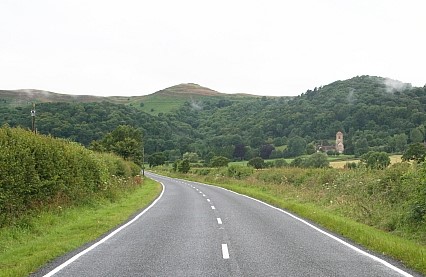
Although there is unlikely to have been any significant settlement here in prehistoric times, the village lies close to the ancient frontier of the Malvern Hills and is on the route from a crossing of the River Severn (at Upton) to the Iron Age hillfort at British Camp (now the A4104). Another Iron Age settlement has been found recently on the same route, on the other side of the river. It has been suggested that this settlement forms part of the system used by the local tribe, the Dobunni, to control the region, including the distribution of cereal harvests stored at sites in the Severn valley. The route extends on to Bredon Hill, yet another hillfort site. Thus the route passing through Welland may have been a significant part of the Dobunni Iron Age travel network. (See Worcestershire Archaeology report.)
British Camp seen from the A4104 heading up from Welland
An archaeological evaluation by Worcestershire Archaeology (unpublished) was undertaken at Cornfield Meadows in 2020 (see map) and revealed a number of enclosure ditches and associated features at the northern end of the site close to the Marlbank Brook and its tributaries. It was dated by pottery to the later Iron Age and is probably an enclosed prehistoric settlement located within the fertile farmland adjacent to the brook. Evidence of extensive burning was recovered, including both heat affected pottery and Malvernian rock. The Malvern area provided a major regional focus for Iron Age pottery production, with rock from the hills used to temper locally produced pottery. It was therefore tentatively suggested that the site might have an association with pottery production.
Medieval
The first documented reference to Welland states that the village, together with Upton, was given to the Bishop of Worcester by Mercian lords in 889, perhaps as part of their support for the developing Christian church (the document’s authenticity is disputed.) The area was heavily wooded and it is unlikely that many people lived here – as late as the twelfth century the area around Malvern was referred to as wilderness.
Welland is not mentioned in the Domesday Book of 1086, probably because it formed part of the manor of Bredon. Several parishes in the area were subsidiary parts of manors further east in the more agriculturally developed zone of the Severn and Avon valleys. The western parts of the estates provided wood for tools, utensils, fuel and building, as well as woodland resources such as honey and game. Woodland areas were also valuable for the pasturing of swine – it may be that this began as a form of transhumance, the seasonal movement of stock from predominantly agricultural areas for summer pasture. Thus the linking of Welland with Bredon was on a sound economic principle, that of complementary resources.
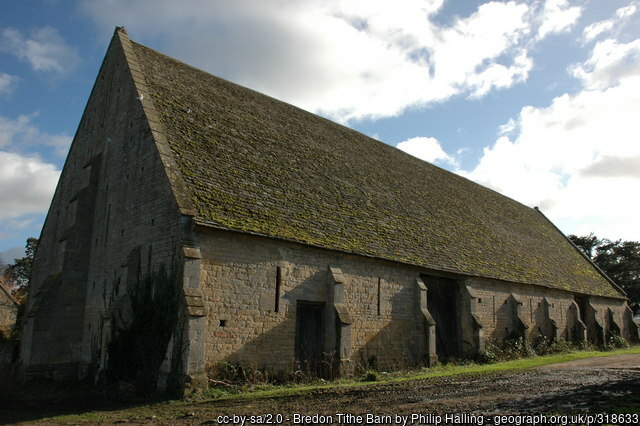
Bredon’s 14th century manorial barn
After the Norman Conquest of 1066, Welland was one of thirteen parishes that were incorporated into William the Conqueror’s Royal Forest, commonly known as Malvern Chase, and subject to forest law. The owner of the land (the Bishop of Worcester) and those living on the land were subject to rigorously enforced rules about the use of the land, which aimed to protect hunting rights. Some clearings had been made before the Conquest but after afforestation, no further clearings were allowed unless permitted by licence of the king.
34 acres in Upper Welland were freed from forest law by Richard I in 1189 and in 1196 the Bishop of Worcester was allowed to extend his clearing by a further 300 acres. Such clearance is called assarting and explains the existence of Assarts Road in Upper Welland. The assart was said to be “neare the Bishoppe’s myll of Wenlonde.” It seems that Upper Welland developed as a distinct community from early times, with another forming around the area near Welland Court.
Taxation assessments suggest that by 1280 approximately 80 people lived in the village, increasing to about 130 by 1327. The population was particularly dense in Upper Welland, perhaps because of the unusual economic approach of letting out assarted land to tenants for money rent. The standard land economy at this time was to let to tenants who paid their rent by manual labour on land (desmesne) retained by the lord of the manor (the Bishop in this case).
In the area around Welland Court, meanwhile, another community was developing along more traditional lines. There is little documentary evidence to support it, but it is likely that this community worked large open fields split into strips and apportioned to individual tenants, with the fields being managed on a crop rotation system. It may be that this community developed earlier than that at Upper Welland – though there is no documentary evidence to support this idea, the traditional agricultural approach and the presence of the Court and church suggest this may be so.
Peasants in the middle ages were mostly tenant farmers but there were also small-scale industries such as potting and tile-making (evidence of clay pits abounds).
The manor had probably been separated from Bredon before 1535 because, in the valuation of the bishop’s lands taken at that time, it is entered apart from Bredon and had a separate bailiff.
Article written by Rose Arno (nee Campbell), June 2023
Cecilia Dudley Campbell, my mother, moved to Welland in 1935 after marrying my father in April 1934. She grew up in Upton-on-Severn, the adopted daughter of Blanche Fowler, a Methodist deaconess and owner of a temperance café in Upton. Blanche had ambitions for Cecilia (she was very keen on education) and after Tewkesbury High School and a few years working as a trainee teacher, she obtained a place at Dudley Training College. She worked in Birmingham and Malvern before being appointed to the infants’ head post at Welland School.
My brother Patrick was born in July 1935 and they moved into the school house at Welland. Mr Band, the headteacher, preferred his bungalow in Upper Welland. Apparently the school house, though uncomfortable and draughty, had some modern conveniences like a flush lavatory (albeit off the kitchen) and some kind of bathroom – all quite unusual then.
Welland School House before it was incorporated into the main school building. Courtesy Alison Ellis.
I think after the war, when the village expanded with council housing and baby boomers, it was decided (by my mother) to move the infants’ class into the parish hall. She seems to have had a great deal of autonomy in this respect but it was a good decision. The downside was that they also served school dinners in the hall, but the stage was ideal for her annual nativity play, and it was large and roomy for the numerous pupils, all different ages and abilities. By 1946 the school house was needed for the new head, Alex Clarke, so my parents moved to Camelot, Brookend, where I was born in August 1946.
She loved her job which she saw as a genuine vocation and I believe she was an excellent teacher. She once boasted that she had ‘never had a child who couldn’t read’.
She was very active in village affairs and a member of the WI, Mothers’ Union and Parochial Church Council. My father was the vicar’s warden. However, she always wanted a headship and this dream was realised when she was appointed to be head at Corse Lawn school in the early 1960s. She retired in 1974.
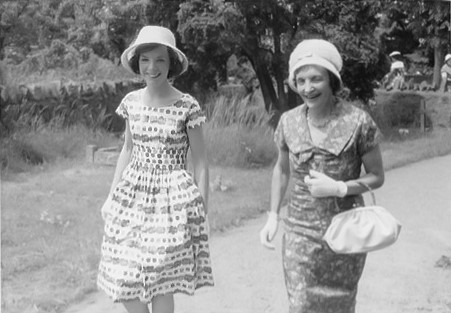
Cecilia Campbell (right) and her daughter Rose attending a wedding in 1960. Courtesy Rose Arno.
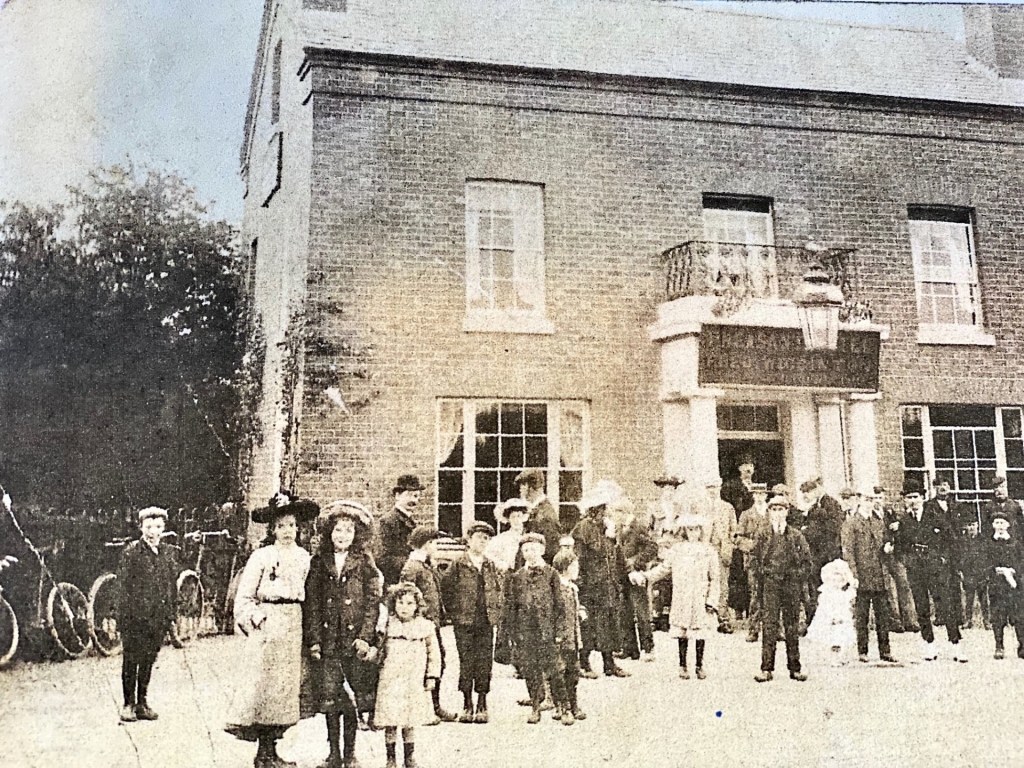
The Pheasant in the second half of the nineteenth century, the earliest photograph we have
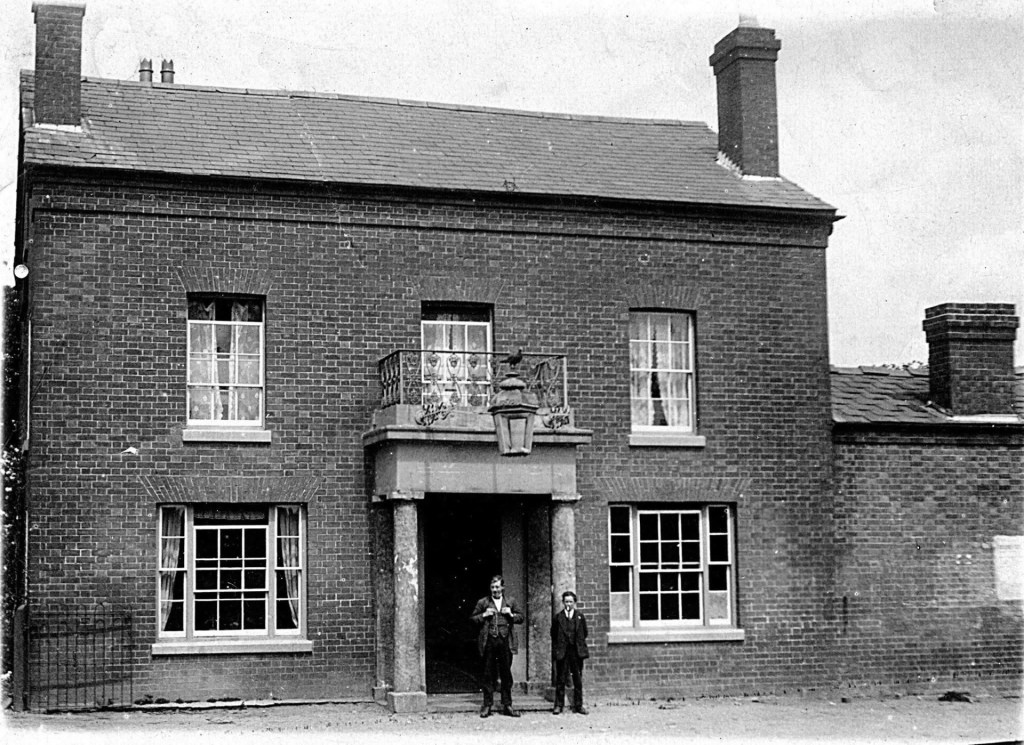
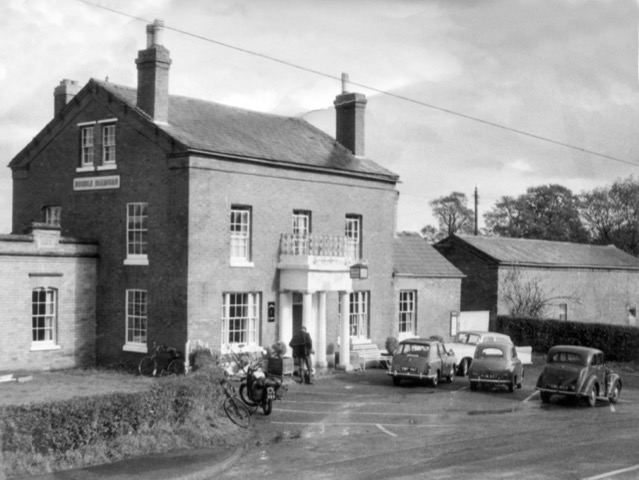
The Pheasant pub stands at the crossroads of Drake Street and the Gloucester Road (see map). This handsome building was completed by early 1843, when the owner was James Archer and the tenant Samuel Ingles. It replaced an earlier Pheasant Inn about 100m further along the road towards Upton. The timing of the rebuild suggests that the owner was keen to take advantage of the expected increase in traffic caused by the creation of improved roads and crossroads as a result of the anticipated enclosure of the common (the Welland Enclosure Act was passed in 1847).
The earliest record of The Pheasant we have found to date is an advertisement for sale by auction in 1774, when it is stated as consisting of the Inn and two orchards, occupier Ann Grubham and proprietor Richard Lutwich. Its position is emphasised, being adjacent to the Chase and on the Upton to Ledbury turnpike road. Later advertised for auction in 1834, the Pheasant then consisted of the inn, stable, cider-house, and about two acres of pasture and orchard. The pub passed through various hands in the 18th and 19th centuries but seems never to have belonged to any one family for long.
The Pheasant (date between 1901-1906) when Ralph John Hunter was the owner and Fred Wiggington was the licensee
The Pheasant circa 1911 when John (Jack) Walker Thompson was the licensee (that’s probably him wearing the apron)
The Pheasant sometime in the 1920s when Henry Jefferson Bryon was the landlord (he is on the left).
Francis Elms became tenant in 1929, when the value of the fixtures, fittings and stock in trade was valued at £192 18s. He and his wife Violet ran the pub until they retired in 1955. It was then taken over by their son, Southwell Elms, and his wife Rhoda, who continued until their retirement in 1982. Southwell was responsible for having the function room built, providing a dance floor and room for a band.
The Pheasant in the early 1960s. Courtesy of the Elms family.
The pub closed in 2010 after a succession of tenants were unable to make it pay all year round. The spacious car park behind the pub was sold off for housing, now St James Close. Various plans for a combination of pub or restaurant and apartments fell through but renovation work is currently under way (2025). The planning application states that the original Pheasant Inn will be converted into three apartments, with an extension providing a further two dwellings. A second extension will provide space for a combined cafe, bar and restaurant.
Anthony Berwick Lechmere was a member of the Lechmere family of Hanley Castle.
After ordination he was first appointed Vicar of Eldersfield in 1826, then Vicar of Welland in 1828. From 1839 onwards he was Vicar of Hanley Castle in addition to Welland and lived in the Hanley vicarage rather than Welland’s. He also served as a magistrate for Worcestershire and was chairman of the Upton-on-Severn Petty Sessions.
The Revd Lechmere was instrumental in campaigning to build a new church for Welland. The present-day St James was finally consecrated in 1875.
This house stands in the Brookend area of Welland on Drake Street (see map). It has been a farmhouse and a grocer’s shop during its existence and probably dates from the late 18th or early 19th century. The name appears in census returns as Slade Firs and Slate Firs. When Sarah Green, widow, was running it as a shop in 1851, the address given was simply, ‘shop, Drake Street’.
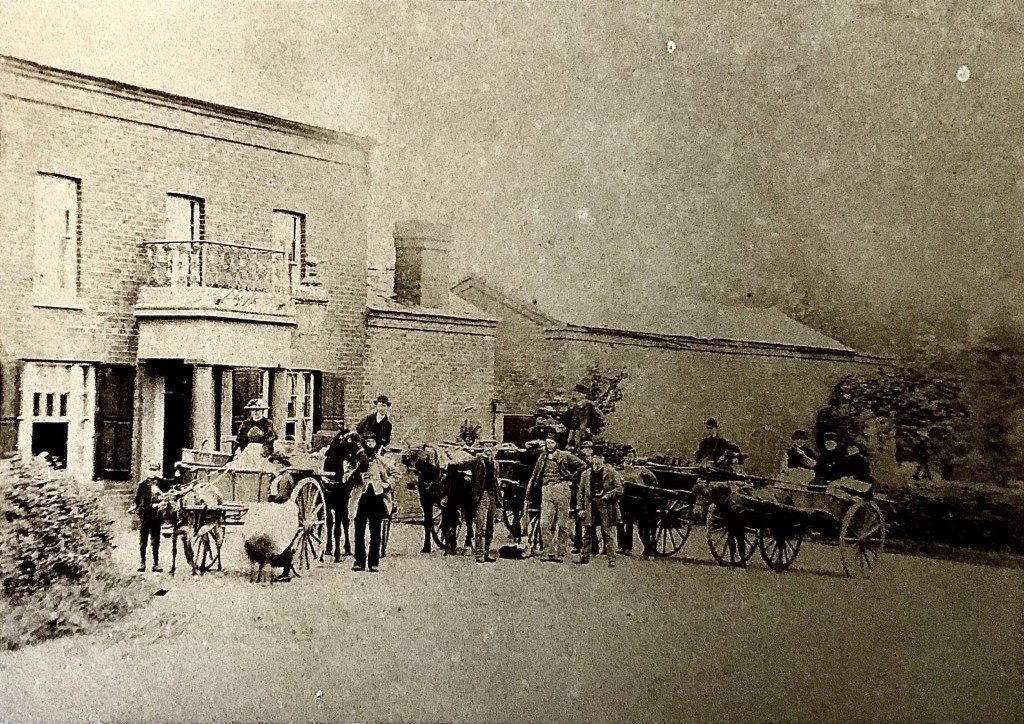
This photo taken around 1910 shows the house as a shop and tea-room. The front door has since been replaced by a window and the gateway and path no longer exist but the house is still easily recognisable.
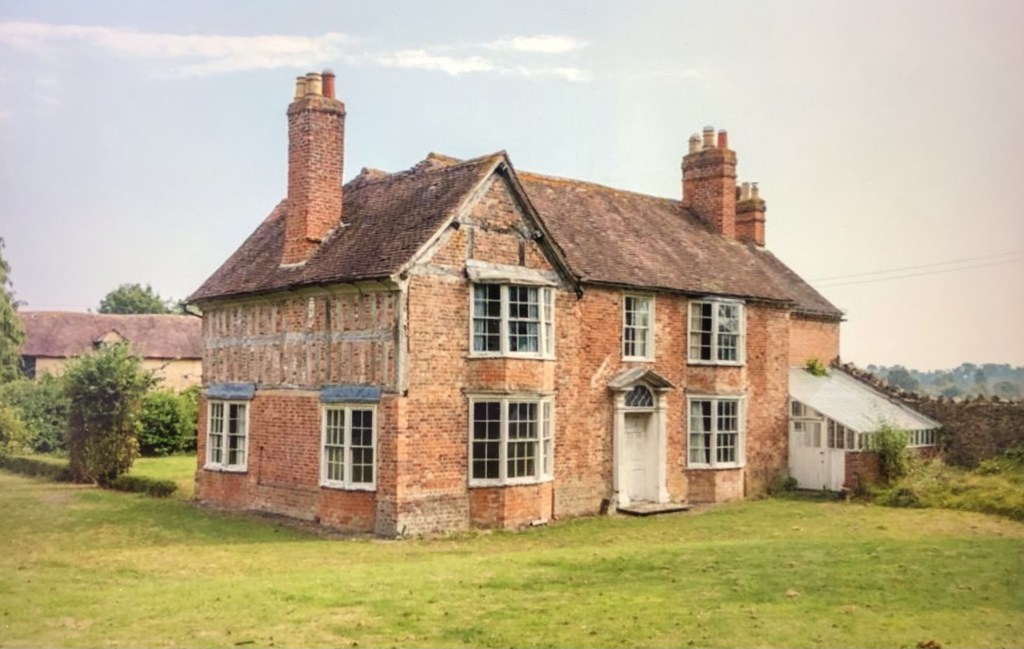
The oldest of the three still stands in Welland Court Lane (see map). Grade II listed, it is believed to date from the early 17th century, with timber framing later encased in brick (see Historic England entry). From about 1839 it was occupied by the curate of the day rather than the vicar. By 1881 it was no longer a vicarage. The Docker family were living there and continued to do so until at least 1939.
The Old Vicarage, photo taken 2019
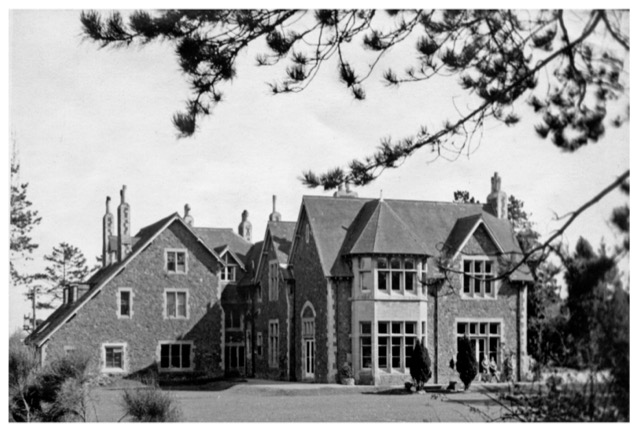
Welland House Care Centre
In 1880 a substantial vicarage was built on glebe land on Marlbank Road, within a few minutes’ walk of the new St James Church (see map). This house remained the vicarage until the end of the incumbency of the Revd Josiah W Coombes, vicar of Welland 1926 – 1942.
The building was used as a remand home from 1943 to the 1970s and is now Welland House Care Centre. Eight houses have been built along the drive, forming Lime Grove.
Rear view of the vicarage, date unknown. Courtesy of the late Mary Purser
Sunny Bank
Directly opposite Lime Grove is a large house built around 1950. This served as Welland’s third vicarage until 1974. For most of that time it was lived in by the Revd Cyril Kay, vicar of Welland 1954 – 1974, and his wife, Jessie. During their time the house still backed on to fields, now the Giffard Drive estate.
This third vicarage had a very large garden with tennis courts and lots of lavender and roses. Revd Kay used to have parties every summer for the Sunday school children with tennis, croquet and board games. Fetes were held there and the Revd Kay also put on Punch and Judy shows. More conventionally, confirmation classes were held at the house.
The house was sold after the Kays left and Welland then ceased to have a vicarage. In the 2010s, the plot was divided in two. The original house, extended since the Kays’ occupation, is now Sunny Bank, and another house has been built behind it.
Thanks to Gwyneth Gill for her memories of this vicarage and the Kays.
The Tewkesbury and Malvern Railway (a branch of the Midland Railway from 1st July 1877) ran from Ashchurch to Great Malvern via Tewkesbury, Ripple, Upton upon Severn and Malvern Wells (renamed to Malvern, Hanley Road from 2nd March 1951 in order to avoid confusion with Malvern Wells on the Hereford line). Construction started from the West Midlands Railway at Malvern and Tewkesbury junction on 1st July 1862. The line opened on 16th May 1864, connecting with the Worcester & Hereford Railway at Malvern and the Birmingham & Gloucester Railway at Ashchurch. The section of line from Malvern and Tewkesbury Junction to Upton passes through the northern part of Welland parish (see map). This section was closed to passengers on 1st December 1952 and the track between Malvern Wells and Upton was lifted in September 1953.
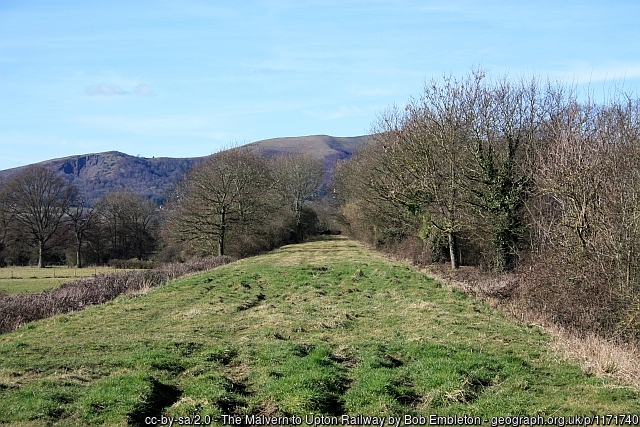
Traces of the line can still be found.
The embankment that lifted the line across a brick bridge over the road towards Hanley Swan (by the junction with Gilver’s Lane) are still clearly visible each side of the road, but the bridge itself was blown up in the early 1970s.
Gilver’s Lane and several footpaths provide views of the line but, for access to the line itself, try Worcestershire’s Wildlife Trust site which runs along the line and has access and a car park at Brotheridge Green, just outside Welland’s parish boundary (see map and the Trust’s website page for details).
A railway buff, Martin Theaker, has done a very informative blog about the line with many fascinating photos. You can find it here. The articles relating to the Welland section are Lumber Tree Farm, Gilver’s Lane, Hillcourt Farm and Brotheridge Green. The article about Gilver’s Lane has several wonderful photos of the Welland Road bridge being blown up!
Railway embankment heading towards the Malvern Hills. Taken from the western end of the Brotheridge Green nature reserve.

 Exploring Welland