Vicarages

Welland has had three vicarages.

The Old Vicarage

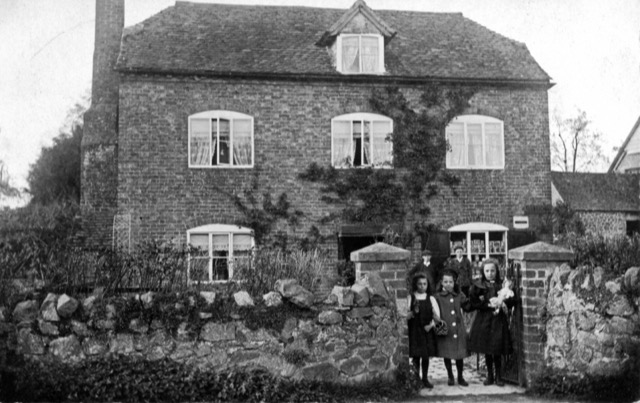
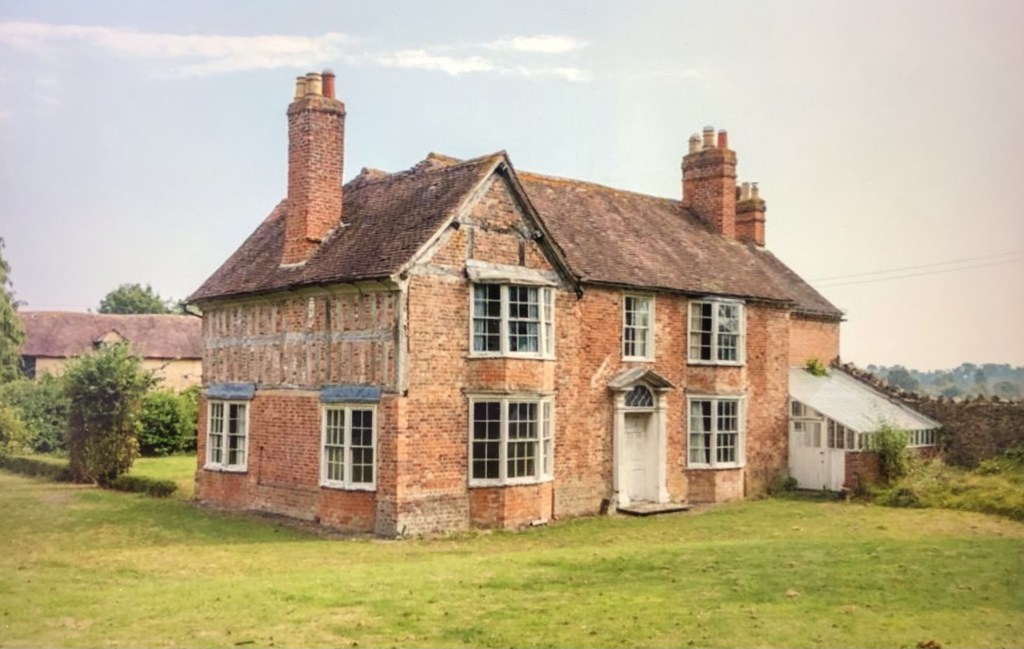
The oldest of the three still stands in Welland Court Lane (see map). Grade II listed, it is believed to date from the early 17th century, with timber framing later encased in brick (see Historic England entry). From about 1839 it was occupied by the curate of the day rather than the vicar. By 1881 it was no longer a vicarage. The Docker family were living there and continued to do so until at least 1939.

The Old Vicarage, photo taken 2019

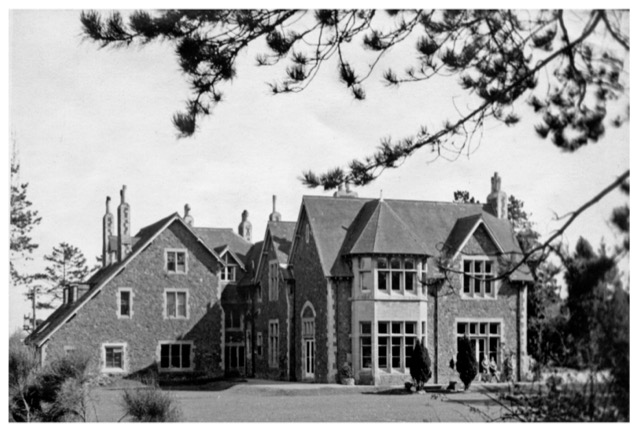
Welland House Care Centre

In 1880 a substantial vicarage was built on glebe land on Marlbank Road, within a few minutes’ walk of the new St James Church (see map). This house remained the vicarage until the end of the incumbency of the Revd Josiah W Coombes, vicar of Welland 1926 – 1942.

The building was used as a remand home from 1943 to the 1970s and is now Welland House Care Centre. Eight houses have been built along the drive, forming Lime Grove.

Rear view of the vicarage, date unknown. Courtesy of the late Mary Purser

Sunny Bank

Directly opposite Lime Grove is a large house built around 1950. This served as Welland’s third vicarage until 1974. For most of that time it was lived in by the Revd Cyril Kay, vicar of Welland 1954 – 1974, and his wife, Jessie. During their time the house still backed on to fields, now the Giffard Drive estate.

This third vicarage had a very large garden with tennis courts and lots of lavender and roses. Revd Kay used to have parties every summer for the Sunday school children with tennis, croquet and board games. Fetes were held there and the Revd Kay also put on Punch and Judy shows. More conventionally, confirmation classes were held at the house.

The house was sold after the Kays left and Welland then ceased to have a vicarage. In the 2010s, the plot was divided in two. The original house, extended since the Kays’ occupation, is now Sunny Bank, and another house has been built behind it.

Thanks to Gwyneth Gill for her memories of this vicarage and the Kays.

Railway

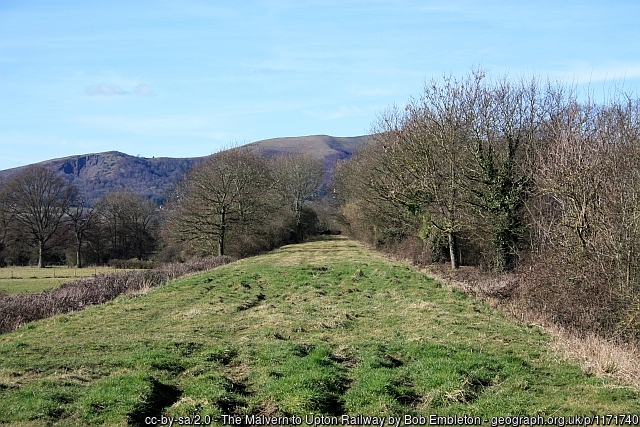
The Tewkesbury and Malvern Railway (a branch of the Midland Railway from 1st July 1877) ran from Ashchurch to Great Malvern via Tewkesbury, Ripple, Upton upon Severn and Malvern Wells (renamed to Malvern, Hanley Road from 2nd March 1951 in order to avoid confusion with Malvern Wells on the Hereford line). Construction started from the West Midlands Railway at Malvern and Tewkesbury junction on 1st July 1862. The line opened on 16th May 1864, connecting with the Worcester & Hereford Railway at Malvern and the Birmingham & Gloucester Railway at Ashchurch. The section of line from Malvern and Tewkesbury Junction to Upton passes through the northern part of Welland parish (see map). This section was closed to passengers on 1st December 1952 and the track between Malvern Wells and Upton was lifted in September 1953.

Traces of the line can still be found.

The embankment that lifted the line across a brick bridge over the road towards Hanley Swan (by the junction with Gilver’s Lane) are still clearly visible each side of the road, but the bridge itself was blown up in the early 1970s.

Gilver’s Lane and several footpaths provide views of the line but, for access to the line itself, try Worcestershire’s Wildlife Trust site which runs along the line and has access and a car park at Brotheridge Green, just outside Welland’s parish boundary (see map and the Trust’s website page for details).

A railway buff, Martin Theaker, has done a very informative blog about the line with many fascinating photos. You can find it here. The articles relating to the Welland section are Lumber Tree Farm, Gilver’s Lane, Hillcourt Farm and Brotheridge Green. The article about Gilver’s Lane has several wonderful photos of the Welland Road bridge being blown up!

Railway embankment heading towards the Malvern Hills. Taken from the western end of the Brotheridge Green nature reserve.

Lawn Farm

Much of the land once belonging to Lawn Farm, on Drake Street, is now part of the Pippin Drive housing estate built a few years ago (see map).

In 1806 Richard Harris is recorded as the proprietor of a landholding paying £2 16s 11d in land tax. The farm name is not given but other records allow us to identify the land in question as Lawn Farm. The current house, brick with some timber framing, was probably already in existence at this time and part of the building may have 17th century origins. The house is Grade II listed. (See Historic England entry.)

Richard Harris married Sarah Solloway in 1798 at Coddington. After Richard’s death in 1829, Sarah continued to farm the land, appearing in the land tax records as Mrs Harris. She married again in 1836 and appears thereafter as Sarah Hooman or Homan. Intriguingly, her husband John Hooman did not appear in her household in the 1841 or 1851 census and her later will states that they were separated. In the 1851 census she is identified as a farmer of 40 acres, 82 years old. Sarah died in 1855.

By 1858 William Harris, a nephew of Richard Harris, was tenant, but the farm was owned by Edward Pace, whose connection to Welland is unknown at present. The 1861 census records William Harris and his family, farming 50 acres. Still the farm is only identified as ‘Farm house, Drake Street’. William died in 1874 and the John Harris who succeeded him was probably his son. It was during John Harris’s tenancy that we see the name ‘The Lawn Farm’ for the first time, in a newspaper advertisment of 15 September 1879 (Worcester Herald).

The advertisement announces an ‘important sale of fruit’ produced by several growers, to be held at The Pheasant in Welland. Heading the list is ‘Mr John Harris, The Lawn Farm’ with crops from Cherry Orchard, Hill Orchard, Stock Orchard, Bacon Hill and Westfield for sale (presumably apples, but this is not stated). There was also a ‘row of damsons’ in Pig Orchard and the fruit of a ‘large walnut tree at back of the house, very thick’.

By the time of the 1911 census Francis Wastie was the owner. He was born in 1867 at Eynsham, Oxfordshire, where the Wasties were a long established family. The 1939 National Register records him at Lawn Farm as a dairy farmer, with his wife Edith, daughters Gladys and Edith, and son Frederick, all engaged in farm work. Another son, Frank Wastie, was working at Church Farm. After his father’s death in 1954 Frank took over Lawn Farm and the family owned it until at least 1979.
Welland Races

In the 19th century Welland Races were a popular one-day event, usually held in July, attracting spectators from Upton, Malvern and further afield. The number and quality of the horse races varied from year to year and they were supplemented by foot racing, ‘rustic sports’ and other amusements. Reports appeared in the Worcestershire Chronicle, the Worcester Journal and other newspapers from the 1820s to the 1890s but the event fell into abeyance for long periods at least twice during this time. The original race course was on Welland Common south of Danemore Farm (see map) but this was no longer available after the 1849 meeting as the land was enclosed. When the races began again in the 1870s Castlemorton Common was used briefly before the event moved to Danemore again as described below.

From 1846 spectators from Worcester could travel down the Severn on the paddle steamer Sabrina, disembarking at Hanley Quay. By the 1870s racegoers could also travel by train as far as Malvern Wells (the Hanley Road station).

James Archer, then owner of The Pheasant inn, was responsible for reviving the races in the 1840s and also acted as steward on at least two occasions. Mrs Mary Ann Ketteringham, The Pheasant’s landlady in the 1870s and 1880s, was frequently praised for her efforts as in this Worcester Journal report from 1873:

‘This annual event came off on Tuesday [22 July] at Dainmore [sic], the ground being kindly lent by Mr Watkins. The weather was fine, between 2,000 and 3,000 persons were on the ground, and there was capital sport. Refreshments were supplied in first-class style by Mrs Ketteringham, of the Pheasant, whose arrangements were as usual of the most satisfactory character. Four races had been announced but several others were added, and the meeting was a thoroughly enjoyable one. Hurdle and flat racing took place during the afternoon, and the several events were well contested. Formerly the horse races took place on Castlemorton Common, and the company had to return to a field near the Pheasant to witness the foot racing. This was an inconvenient arrangement, and the alteration made this year was a great improvement, and as such was highly appreciated by all who patronised the meeting. In the evening a ball took place at the Pheasant (the magistrates having granted an extension of closing time till two o’clock), about 100 were present, and the gathering was most successful …’

Evidently these were lively and well supported events, sustained in the village over a long period of time.

Smallpox Hospital

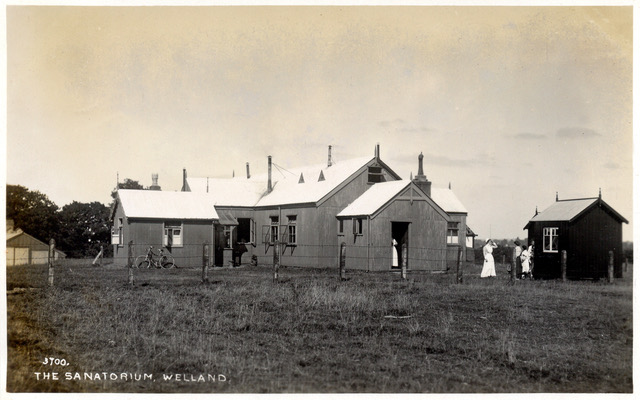
This postcard, dating from around 1915, shows the smallpox hospital that was once situated at the far end of California Lane (see map).

In the 1890s a small isolation hospital was built for Upton-on-Severn on the Upton to Welland road, intended for patients with infectious diseases such as measles, diphtheria and scarlet fever.

It was felt that an additional site for dealing specifically with smallpox cases would be useful and so this corrugated iron structure was built on a lane that went nowhere around 1905.

Smallpox vaccination was made compulsory in England and Wales in 1853 but it did not cease to be endemic until the 1930s. In the event, the Welland hospital seems never to have been needed for this purpose and it closed around 1944. A private house now occupies the site. To date we only know of one individual who was nursed at the Welland hospital: Ethel Hadley passed away there in 1919 from pulmonary tuberculosis.

Note the title of the postcard is ‘The Sanatorium’, perhaps slightly less ominous than ‘Smallpox Hospital’!

Corrugated iron buildings of this type were popular in the early 20th century for use as churches and community halls. Several examples survive locally, e.g. at Coombe Green, Hollybush and on the Upper Hook road.

We would be pleased to hear from anyone whose relatives are known to have been patients or staff at the smallpox hospital.

Photo: Peter Roberts – The Sanatorium, Welland

National School

The first school in Welland was built in Welland Court Lane under the auspices of the National Society. This organisation was founded in 1811 as the National Society for Promoting the Education of the Poor in the Principles of the Established Church in England and Wales. It promoted the building of schools to provide basic education to the children of the poor and was very closely linked to local parish churches and their clergy and congregations. Attendance was neither compulsory nor free although fees were subsidised by the church or parishioners for children whose parents could not pay.

In 1829 grants of £565 were made towards the costs of building the Welland school, which was put up on or very near to the green in Welland Court Lane, where the road forks towards Malthouse Farm (see map).

In the 1861 census records William Hillier was listed as a National School master and his wife Caroline a National School mistress. They were living in Drake Street so it is likely that they ran Welland school at that time. William was also the enumerator for the 1861 census in Welland.

Victorian schools have a grim reputation but a newspaper report from 29 June 1864 relates a happy event when 75 children from the school were treated to tea and games at Brookend House by invitation of Mrs Henry Green and her son, Mr Henry Green. The children ‘were marshalled by the mistress, Mrs. George, and led on to the spacious lawn in front of the house by the Rev. Lionel E Brown, the respected curate of the parish. Mrs Green and her son also invited many personal friends and parishioners to partake of her hospitality and to witness and join the games of the juveniles. After tea the children sang appropriate pieces, and with the visitors, entered heartily into various rustic games, including balls, croquet, foot racing, jumping and dancing on the green, to the strains of old John Heath’s violin, so well known in that neighbourhood.’ (Worcestershire Chronicle)

The National School was replaced in 1876 by Welland Board School, now Welland Primary School.

Primary School

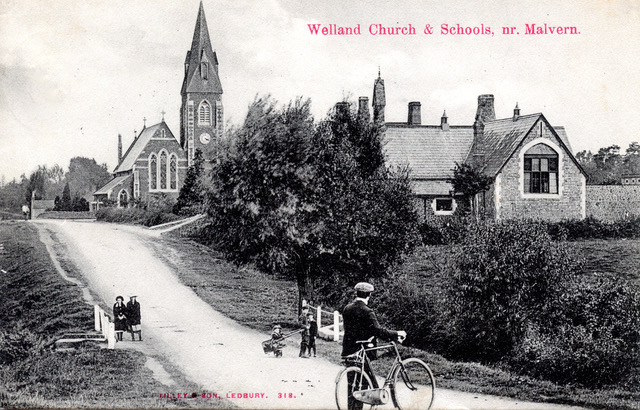
Welland’s present day primary school on Marlbank Road was opened in 1876 as a board school with room for 120 children. It replaced the National School in Welland Court Lane and was designed by John West Hugall, also responsible for St James Church. The original school buildings included a house for the headteacher.

Board schools were a result of the 1870 Education Act, which allowed locally elected boards of officials to build and manage schools where they were needed, funded from the local rates.

Welland village hall, next door to the school, provided extra classroom space and dining facilities for the children during the mid-20th century.

Originally the school faced directly onto the road (now the A4104) but alterations to the crossroads in the 1970s diverted the road away from the village hall and school to give them some protection from traffic (see map).

Photo: Peter Roberts. Welland School c1910

Robert Pratt

In his will of 1619 Robert Pratt left to his wife ‘all that capital messuage and farm called Welland Court or Dansies Farm’. It has long been known that Welland Court was once called Dansies or Dauncies, but this is the first document we have come across that gives both names.

To date we have not been able to trace Robert’s origins, but parish records record his marriage to Anne Allen at Pull Court, Bushley, in 1593. (Pull Court or Poole Court was on the site of what is now Bredon School.)

Robert seems to have settled in Hanley Castle, as six of his children were baptised there, and a document exists recording his purchase of a house and land there. The children baptised at Hanley Castle were: Appoline, 1594; Elizabeth, 1596; Anne, 1597; Mary, 1598; Katherine, 1599; William, 1601. A further two children are recorded amongst Welland baptisms: Barbara, 1608; Grace, 1609. The baptisms of the other children referred to in the will of 1619 are missing: Robert (the heir), Thomas, Jane, and Margaret.

Welland Court seems to have been rebuilt around 1600, which would fit with the Pratt family’s apparent move to Welland.

The parish records for Welland in the 17th century are very patchy and only a few references to the Pratt family survive after Robert’s death in 1620. They did not own Welland Court for very long as it was sold to John Bentall in 1640.

Welland Court

Welland Court is right in the south-east corner of the parish at the end of Welland Court Lane (see map). A house has probably been standing on this site since at least the 13th century, immediately adjacent to the village’s original graveyard and church.

For some period of its history the house and its land formed the manor of Dauncies or Daunseys, separate from the manor of Welland. Dauncies was owned by the Wa(l)pole and Daunsey families in the 15th century. It then passed to the Mucklowe family of Worcester in 1515-16. One of their tenants at Dauncies was probably Edmund Stokes. The lay subsidy records for Welland the 1520s list him as worth more than anyone else in Welland and therefore subject to the highest tax.

The estate may have changed hands to Robert Pratt around 1600. His will of 1619 is the first document we have come across that gives both names: ‘all that capital messuage and farm called Welland Court or Dansies Farm’.

Freddie Charles (1912 – 2002), an architect who specialised in conserving and repairing timber-framed buildings, visited Welland Court in 1973, recording his visit in two pages of sketches and notes. He concluded that it had been a timber-framed house built about 1600 in a U-shape. Later alterations encased the timber-framing in brick and enclosed the courtyard, forming the continuous west front seen today. The date would fit with the Pratt family’s apparent move to Welland and it is possible therefore that Robert Pratt was the builder of the current house. Whether any of the previous dwelling was incorporated into the new structure remains unknown.

Robert Pratt’s son, also Robert, sold the estate to John Bentall, merchant and citizen of London, in 1640. The Bentalls were connected by marriage to John Archer and Simon Archer of Welland. Bentall’s widow Ann sold the estate to Ralph Taylor in 1662.

We know from the Hearth Tax returns that Welland Court had nine hearths about this time, more than any other house in Welland. The Taylors were in possession until Allen Bright bought the house and estate in 1760. Originally a pewterer from Colwall, Herefordshire, Bright became a merchant in Bristol. Several other members of his family owned the Court after him but neither Allen Bright nor they seem ever to have lived there, the house and land being rented out instead.

In 1876 the estate was sold to the Ecclesiastical Commissioners for England and continued to be tenanted. The Trickett family bought it in the early 1940s and it was then sold to Philip and Elizabeth Archer in 1983. The Archers carried out a comprehensive programme of repairs and restoration and re-bought some of the land that previous owners had sold. The house changed hands again in 2022.

Photo: Bob Embleton, geograph-3421882

St James Church

St James Church was consecrated in April 1875, at a ceremony attended by the bishop of Worcester, clergy from the surrounding villages and further afield, and a large congregation of local people. Also, according to the report in the Worcestershire Chronicle of 10 April, ‘the labouring classes evinced warm interest in the proceedings’.

The Revd Anthony Berwick Lechmere, vicar of Welland and Hanley Castle, had long campaigned to raise funds for a new church. The site across the road from The Pheasant (see map) was donated by Abraham Watkins of Woodside Farm and the total cost of the building was about £4,000. The church could accommodate about 400 people.

A new church was necessary because the old church, next to Welland Court, was too far away from most of the village’s population by the mid-19th century. It was also too small, in a dilapidated state, and the graveyard was full. When plans were first made, it was intended to re-use timbers from the tower of the old church, but the wood proved too decayed to make this possible. The existing four bells did, however, provide some of the metal for the six bells of the new church, cast by Taylors of Loughborough.

John West Hugall of Oxford was the architect, and the building work was undertaken by Messrs. Geo. Wall and Henry Hook of Brimscombe, near Stroud. In the same spirit of modernisation, Welland’s new church was followed shortly afterwards by a new school, still in use today, and a vicarage, now Welland House Care Centre. Both were designed by Hugall.

The new church had some space around it for burials but land for a cemetery on Marlbank Road had already been provided for in the 1850s enclosure act. Interments date from the 1930s and the cemetery is still in use today.

Hugall’s plan of St James can be seen in the Artefacts in St James Church section, as can the list of Welland vicars from 1300 and other information on items linking the old and new churches.

This early 20th century postcard presents a clear view of St James taken from the adjoining field, now Purser’s Orchard. The tower clock was installed to mark the diamond jubilee of Queen Victoria in 1897.

Photo: Malvern Museum

The most recent major changes to the church were made in 2010-2012 when the fixed pews were removed and building work was undertaken to make the internal space more flexible and provide a kitchen and toilets. A screen and projection equipment were installed in 2023 to enable films and live broadcasts to be shown. A series of special events took place from April to July 2025 to mark the church’s 150th anniversary and raise funds for ongoing work. Unfortunately, the weather vane, just visible in the postcard above, had to be removed in 2023 following storm damage.